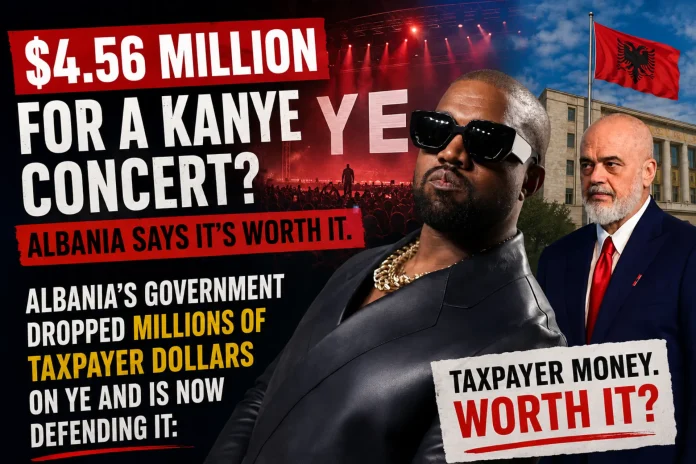
Albania’s government has directed $4.56 million (€4 million) from public reserves to back a one-night Kanye West concert set for Saturday, July 11, 2026, at a purpose-built venue on the outskirts of Tirana. Officials are defending the allocation as essential for capturing tourism gains and elevating the country’s international profile. The decision came after advance ticket sales created pressure to keep the show from collapsing, and many residents have voiced strong disapproval, viewing the expenditure as a questionable use of taxpayer resources when domestic priorities remain pressing.
The allocation from the state budget reserve fund happened at the last minute once it became clear the production faced potential shortfalls that could lead to cancellation. Nearly 25,000 tickets had already been purchased by fans from 80 countries, which officials said would have created an embarrassing situation for Albania on the international stage if the show fell through. Government calculations point to at least €100 million in projected economic returns through visitor spending on accommodations, food, and services in the capital region, framing the upfront public commitment as seed funding for broader gains. The Albanian bailout mirrors a familiar pattern for Ye’s recent tour calendar, where sponsors or promoters have pulled support at the last minute, including the Wireless Festival PayPal sponsor pullout over Nazi-related remarks.
Kanye West continues to rank among the most culturally influential artists worldwide due to his long career in music production, songwriting, and fashion, which has built a dedicated global fanbase that spans multiple generations. His international tour history has run into repeated obstacles in recent months, including Ye being denied entry to the UK at the last minute. The Albanian government first announced the concert several months earlier as a deliberate step to bring a high-profile international act that could generate widespread attention and visitor interest. His established popularity directly drove the heavy international ticket demand, turning the event into a potential showcase for Albania’s efforts to expand its tourism sector beyond traditional attractions.
Prime Minister Edi Rama has defended the allocation to Reuters as a way to avoid disappointing the foreign ticket holders and to seize an opportunity to promote Albania to music enthusiasts around the world. Culture Minister Blendi Gonxhja has described the performer as a great artist and stressed the record-setting scale of the production along with its expected direct economic contributions to the local economy. These positions show the government’s strategic interest in using the concert to demonstrate that Albania can successfully host major global events and attract new audiences, according to Deutsche Welle’s reporting from Tirana.
The performance will take place at a temporary venue called Eagle Stadium, built specifically for this concert on the outskirts of Tirana with a planned capacity of up to 60,000 people. Around 3,500 workers handled construction under accelerated schedules to complete the facility ahead of the July 11 date. This dedicated setup allows for a much larger audience than standard local venues and positions the show as the biggest musical event of its kind in the country’s history.
General public reaction has been largely critical, with many Albanians voicing frustration over the direction of taxpayer money toward a single entertainment event. The choice has become intertwined with ongoing protests in Tirana that began in late May 2026 and center on concerns about government development projects and spending decisions. Residents have raised direct questions about whether this represents responsible use of public funds, particularly in light of needs in infrastructure, healthcare, and other areas that affect daily life. Tensions around Ye’s concert appearances have spilled into international coverage as well, with public backlash recently following the São Paulo arrest threat over his “Heil Hitler” song.
The government shows strong interest in the concert because it fits into a wider push to grow tourism and improve Albania’s international image through high-visibility cultural programming. By providing last-minute backing, officials aim to turn one major event into lasting promotional value that could encourage repeat visits and positive perceptions among international audiences. This approach reflects calculations that the short-term investment can yield multiplier effects in the hospitality sector and help establish the country as capable of hosting world-class productions.
While the anticipated economic returns provide one lens for evaluating the spending, the direct impact on taxpayers invites scrutiny over opportunity costs and the process for deciding such allocations. High-profile events featuring globally recognized artists can create immediate excitement and revenue spikes, yet they also surface real tensions between promotional ambitions and the steady needs of citizens in a developing economy. The actual attendance figures and measurable benefits from this weekend will likely shape how similar government-supported initiatives are viewed moving forward.