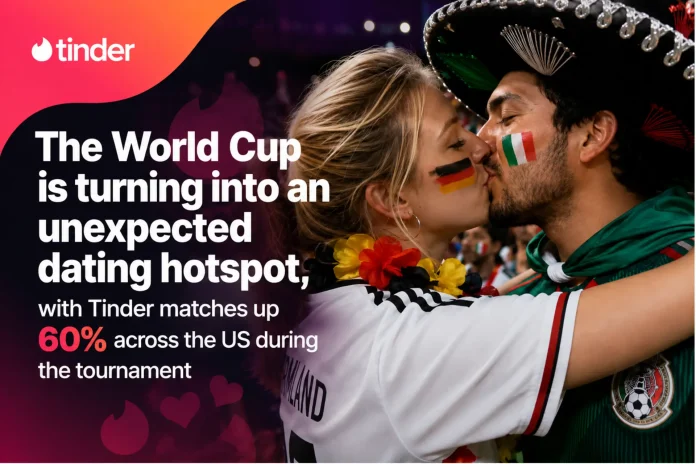
Tinder matches throughout the United States have climbed nearly 60 percent since the opening of the 2026 FIFA World Cup, according to internal platform data cited by Mashable. The surge overlaps with an average 47 percent rise in activity across the tournament’s 16 host cities as fans from dozens of nations arrive in North America. Internal figures covering the first week of the tournament show the trend reaches well beyond casual swiping.
Between June 11 and June 16, the dating app logged a 15 percent increase in total U.S. users and a 25 percent jump in swiping activity compared with the same period in 2025. Domestic users in host cities powered much of the momentum with a 22 percent rise in engagement. The numbers describe a clear pattern: the excitement surrounding the world’s biggest sporting event is spilling into personal lives through digital channels.
The increases became especially pronounced on match days. In Monterrey, Mexico, activity surged more than 80 percent around the Sweden versus Tunisia game. Guadalajara saw a 74 percent increase during South Korea’s matchup against Czechia. Boston recorded a 47 percent rise coinciding with the Iraq versus Norway contest. These localized spikes suggest that the energy inside stadiums is translating directly into heightened social activity on screens.
Many international fans are leaning on Tinder’s Passport feature, which lets users match with people in other cities and countries. Internal data shows notable increases in use by supporters from the United Kingdom, Brazil, Thailand, and Nigeria. Heavy interest has been directed toward major U.S. hubs including the New York and New Jersey area, Los Angeles, and Miami. Travelers appear to be using the tool both to preview connections ahead of their trips and to meet people once they arrive.
The 2026 World Cup is the first to be co-hosted by three nations: the United States, Canada, and Mexico, according to the official tournament page. The event features an expanded field of 48 teams spread across 16 cities (11 in the U.S., two in Canada, three in Mexico), creating a continent-wide celebration that has already drawn hundreds of thousands of visitors. The distribution of host cities shows how the tournament has transformed everyday urban spaces into vibrant gathering points.
This convergence of global fans has created fertile ground for new social dynamics, even as women-focused platforms such as the Tea dating safety app reshape how singles evaluate matches. Shared passion for the sport often leads to spontaneous conversations in fan zones, bars, and public spaces. Many of those conversations now begin or continue on dating apps. The platform data indicates that people are not only watching the matches together but also seeking out personal connections that extend beyond the final whistle.
This phenomenon fits a broader pattern seen during other major international events. Large-scale gatherings lower social barriers and create environments where people are more open to new interactions. The addition of location-based matching tools amplifies this effect by removing geographical obstacles that normally limit meeting new people during travel.
For many fans, the tournament represents a rare window of freedom and excitement. Whether they are following their national team across multiple cities or simply enjoying the festive atmosphere, the combination of travel, community, and heightened emotions appears to be driving increased use of dating platforms. The result is a temporary but meaningful expansion of social circles that might not form under ordinary circumstances.
As the tournament continues through July, the trend offers a window into how global events shape personal behavior. The 2026 World Cup is proving to be more than a sporting competition. It is also functioning as a large-scale social experiment where technology helps turn fleeting moments of shared joy into lasting connections.