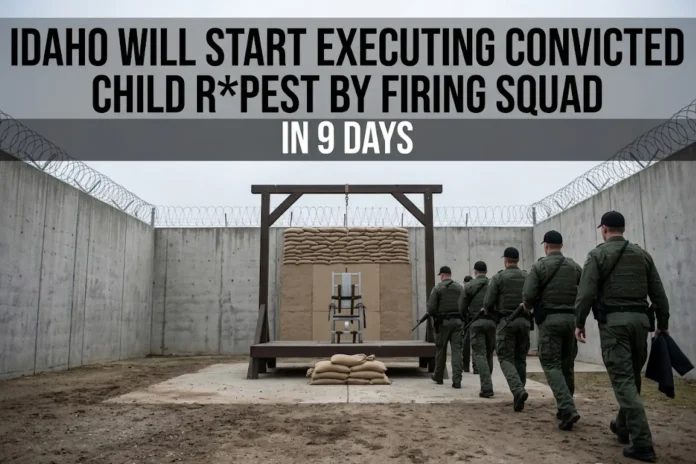
Idaho will implement firing squad executions as its primary method starting July 1 while a separate law already allows the death penalty for the most severe cases of sexual abuse against children, developments that have drawn attention amid a documented rise in reported incidents across the state.
House Bill 37, signed into law on March 12, 2025, by Governor Brad Little, designates the firing squad as the default execution method after years of challenges securing lethal injection drugs and a failed execution attempt in 2024. The change follows Idaho’s earlier authorization of firing squads as a backup option in 2023 and comes as the Department of Correction completes facility upgrades and prepares volunteer teams from experienced law enforcement officers. The bill passed the Senate 28-7 and the House 58-11, with opponents including three Republicans and all 15 Democrats. Officials have confirmed the department will be ready to carry out any court-ordered execution once the new protocols take effect on July 1.
House Bill 380, effective since July 2025, created the capital offense of aggravated lewd conduct with a minor child under 16 when prosecutors can prove at least three of 17 specific aggravating factors such as repeated abuse, use of force, kidnapping, or the offender holding a position of trust. The measure also established mandatory minimum prison sentences for related offenses. Lawmakers advanced both bills as part of efforts to strengthen accountability for crimes that cause profound and lasting harm to children.
State data underscores the context for these stricter measures. The Idaho Attorney General’s annual child sexual abuse report for fiscal year 2025 recorded 889 incidents reported to the Department of Health and Welfare, a 16.5% increase from 763 the previous year. Prosecutors filed 1,232 child sexual abuse cases in the same period. Nationally, estimates indicate that one in four girls and one in 13 boys experience child sexual abuse, with the vast majority of cases involving someone known and trusted by the child or family. These figures reflect both greater awareness and reporting as well as the persistent scale of the problem.
Idaho’s recent execution history also shaped the push for a reliable method. The state has not carried out an execution since 2012, when Richard Leavitt was executed by lethal injection. A scheduled lethal injection for death row inmate Thomas Creech in February 2024 was halted after the medical team failed multiple times to establish an intravenous line despite attempts in his hands, arms, legs, and feet. That incident, combined with ongoing difficulties obtaining execution drugs, prompted lawmakers to prioritize the firing squad as the primary option. All eight current death row inmates were convicted of murder, and no individuals have yet received death sentences under the new child sexual abuse provisions.
The laws reflect Idaho’s long-standing commitment to capital punishment alongside practical responses to implementation barriers. Supporters argue that severe crimes against children warrant the strongest possible penalties to deliver justice for victims and deter future offenses. Critics note that any new capital cases would still face lengthy legal processes, including potential challenges based on U.S. Supreme Court precedent limiting the death penalty for certain non-homicide crimes. The policies also raise questions about costs, the recruitment of volunteer execution team members, and the broader effectiveness of expanded capital punishment in addressing root causes of child sexual abuse.
Online discussions have amplified these changes, with some posts claiming executions of convicted child sex offenders would begin within days. In reality, the firing squad protocol update and the existing capital provisions represent policy adjustments rather than any immediate scheduled proceedings. Successful prosecution of qualifying cases would still require investigation, trial, conviction, sentencing, and appeals that typically span years. The developments highlight ongoing tensions between public demands for swift accountability in cases involving vulnerable children and the deliberate pace required by the justice system.