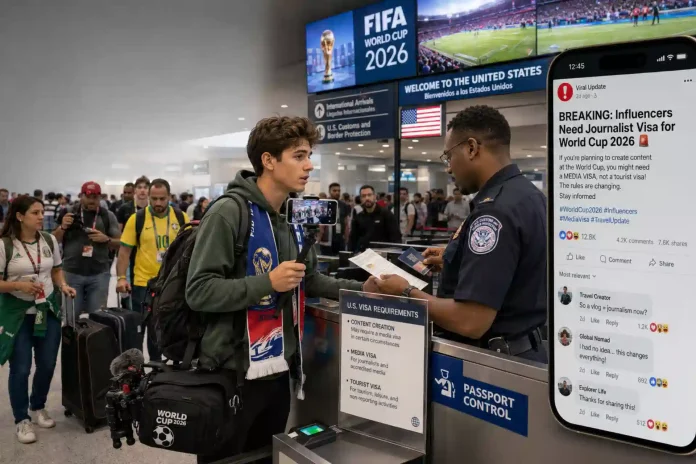
A single X post from football news account @TouchlineX lit up social media on June 11, 2026, just as the 2026 FIFA World Cup kicked off. The post claimed foreign influencers recording and posting content during the tournament in the United States must hold a journalist or media visa or risk deportation.
A photo of Trump alongside World Cup logos drew thousands of likes. Frustration poured in through comments, targeting U.S. visa policies. Some asked if American doors truly open for visitors, especially online personalities. Others argued the nation polices its borders tighter than necessary. The post became fuel for talk about rigid control measures before the tournament shared by the U.S., Canada, and Mexico.
That post hit close to home since it lined up with actual U.S. rules on entering the country. A shared announcement from U.S. Customs and Border Protection along with the Department of Homeland Security, covered by El País, states plainly: if someone arrives solely to make online content like influencers do and earns money from that activity while inside the nation, authorities see that as employment, which means a proper visa must be secured first.
Most folks know the drill. Visitors holding a B-2 visa or entering via ESTA aren’t allowed to earn money here. Getting paid through sponsored posts? That counts as work. So does cashing in from YouTube ads or teaming up with brands while staying in the States. These moves fall outside what’s permitted. Rules have been clear for years earning income like this breaks the terms.
However, the viral framing turns a compliance issue into a blanket threat. There is no evidence of an automatic “journalist visa or deportation” rule for every influencer simply filming matches or sharing personal posts. Casual fan content and non-monetized travel updates are typically viewed differently from professional, income-driven production.
Primarily foreign influencers and creators whose main goal is producing monetized World Cup content while physically in the U.S. (especially the 78 matches hosted stateside).
Evidence of intent to earn money from U.S.-tied activities, such as sponsorship deals, ad revenue generated during the stay, or obvious commercial plans. Border officers may review social media, messages, or devices.
Purely personal videos for non-paying audiences usually stay in safe tourist territory. The line blurs with paid partnerships or systematic revenue generation.
Professional journalists, media crews, and qualifying creators can pursue the I media visa for representatives of foreign media organizations producing informational or news-gathering content for audiences outside the U.S. Requirements often include ties to a foreign outlet and newsworthy focus rather than pure entertainment or advertising.
Other options like O-1 visas exist for those with extraordinary ability in media or entertainment. CBP and DHS have ramped up warnings due to the tournament’s scale millions of visitors expected and thousands of creators to clarify longstanding rules rather than introduce new ones.
Getting it wrong might lead to being turned away, sent back, or blocked later. How things play out depends on the situation, especially at big airport hubs near event locations.
FIFA handed out close to 16,000 passes for media access, proof that big crowds of journalists arrive when the tournament kicks off. Independent content makers show up just as often, drawn by the scale of the occasion.
The creator economy continues evolving, and U.S. rules are catching up. Influencers planning monetized coverage should consult immigration pros and apply for proper authorization early to enjoy the games without drama.