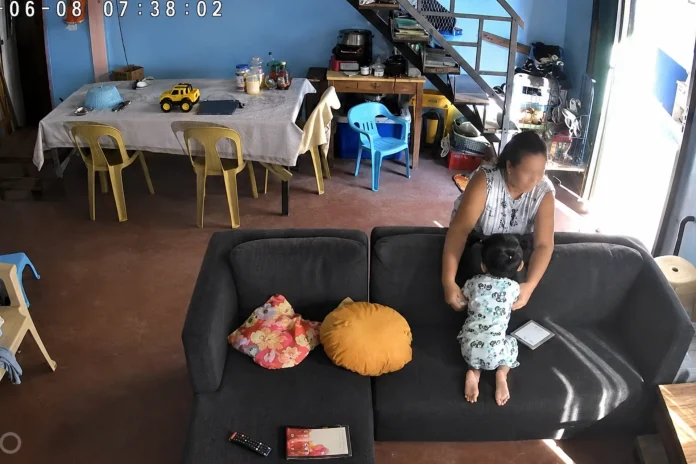
The home security camera footage is heart-pounding. A young child in patterned pajamas sits calmly on a dark L-shaped sofa in a living area. Suddenly, at 7:38 a.m. local time on June 8, 2026, violent shaking erupts. Furniture shifts, chairs topple, objects crash to the floor, and items scatter everywhere. Within seconds, an older woman the grandmother races across the violently shaking room from the side, reaches the child, grabs and embraces them protectively, and pulls them to a safer spot on the floor, shielding the child with her body as debris falls.
A shaky recording, just under two minutes, shows panic inside a home near where the quake hit in Mindanao people sprinting, grabbing children, reacting fast. Posted online by @surajit_ghosh2 at about 11:50 UTC June 8 through X, it spread quickly because of how real it felt. Though silent, the visuals carry weight, revealing urgency without any words spoken.
A powerful shaking began just after sunrise off the coast of southern Mindanao, close to Sarangani, at roughly 7:37 a.m. That jolt hit hardest some 24 to 32 kilometers west of Maasim. Structures gave way under the force – part of a Jollibee restaurant in General Santos City came down among them. Sliding earth blocked roads while electricity cut across towns. Nearby shorelines saw waves rise by one meter when the sea pulled back then pushed forward again. People lost their lives; numbers range between 19 and 32. More than a hundred suffered wounds, reaching as high as two hundred. Over one hundred tremors followed one stronger shake stood out.
Shaking often hits here because the land curls around the edge of a restless ocean belt. When tremors struck, the leader ordered teams into motion scientists from home and helpers from abroad began moving supplies fast. Schools went quiet, halls empty while workers dug through rubble day after day. Help arrived from groups who track earth movements plus charities used to disaster zones. Children stayed home as crews pulled debris aside searching for signs of life.
Spreading fast, videos move across places like X, carrying real moments into global view. Still, what looks new might actually be old clips reused without clear origin. Sometimes facts get twisted, even when emotions run high.
This tale begins with how families hold tight when the ground shakes. Not long after comes bravery that nobody saw coming ordinary people moving fast without thought of danger. A single phrase spreads: Drop, then cover, keep holding no matter what. Where quakes strike often, protecting those who cannot flee becomes second nature. Even in wreckage, something clear remains the instinct to shield others does not wait for orders. With every step forward, truth matters more than speed. Small acts, unnamed faces, doing right simply because it must be done.