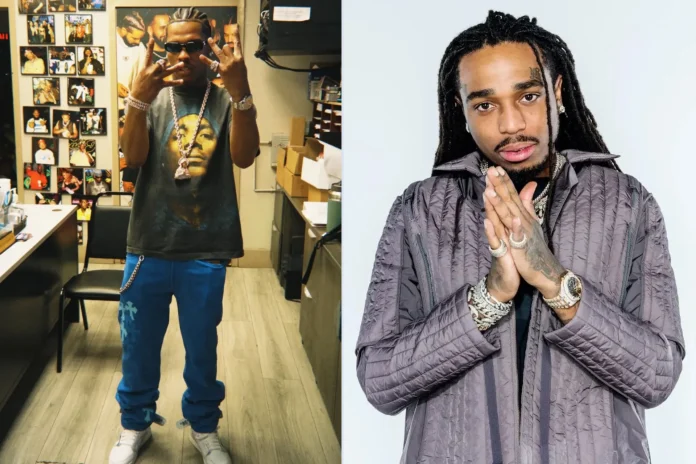
Lil Baby is stepping back from recording guest features, claiming many artists fail to properly value the commercial impact he brings to their records.
The Atlanta rapper, one of hip-hop’s most reliable hitmakers of the past several years, voiced his frustrations amid circulating reports of a payment disagreement with Quavo over their 2025 collaboration “Legends.”
According to widely discussed accounts tied to Lil Baby’s camp — often referenced under the “Wham” banner from his 2025 album WHAM (Who Hard As Me) — Quavo’s team initially received a quote of $300,000 for a feature. The deal was reportedly negotiated to $100,000 paid upfront, with the remaining $200,000 deferred until after the track’s release and performance. Following the April 11, 2025 release of “Legends,” which gained traction and received a music video, communication allegedly stopped and the balance was never paid, per the claims.
Lil Baby and Quavo have collaborated previously and share Atlanta roots as well as past connections to Quality Control Music. Neither artist has issued a formal public statement directly addressing the latest payment allegations, which first gained traction through social media.
The development aligns with Lil Baby’s evolving stance on features. As early as 2022, he publicly referenced prices in the $300,000–$350,000 range and began scaling back his guest appearances. His WHAM project featured high-profile collaborators including Young Thug, Future and Travis Scott, further cementing his position as a major streaming and chart force even as he grew more selective about outside work.
Industry observers note that feature fees for A-list artists like Lil Baby have frequently ranged from $200,000 to $500,000+, depending on demand and timing. However, deals in hip-hop are often handled via verbal agreements or deferred payments, sometimes leading to disputes once a song gains traction. Many top artists have expressed similar “feature fatigue,” feeling they contribute significant streaming power and promotional lift without equitable splits, promotion or prompt compensation in return.
The latest story has sparked debate online, with some fans supporting Lil Baby’s decision to prioritize his own projects and “protect his value,” while others view the public airing of the Quavo situation — given the two’s history — as unnecessary. Broader conversations about unpaid or underpaid features, ghosting after success and one-sided industry relationships have resurfaced as a result.
Lil Baby has maintained strong momentum through his solo work and touring. Whether this marks a long-term exit from guest verses or a momentary stance remains to be seen, but it underscores persistent challenges in rap’s business ecosystem around compensation and mutual respect.