

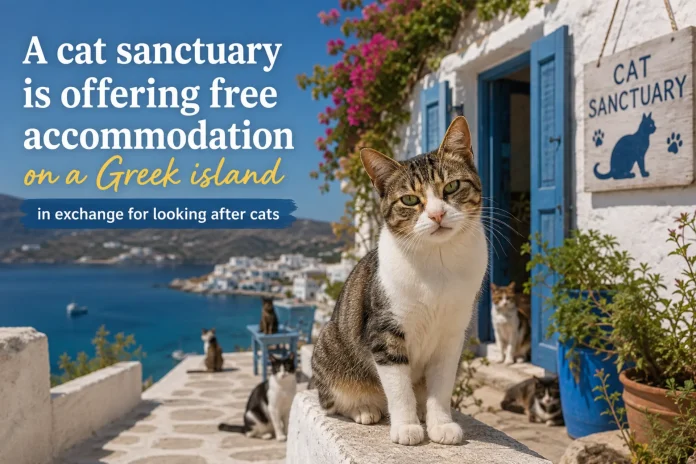
Cat lovers can secure free housing on a Greek island by caring for stray felines at a dedicated sanctuary.
On the Cycladic island of Syros, the nonprofit Syros Cats offers volunteers a private bedroom in shared housing, daily breakfast, and covered utilities. In return, participants commit to about five hours of work each day, five days a week, handling tasks such as feeding cats, cleaning litter trays, medicating animals, and socializing kittens. The program requires a minimum one-month stay, with volunteers covering their own travel costs and most meals. Applications for 2026 have closed due to overwhelming demand, while interest for 2027 opens in September 2026.
The sanctuary supports dozens of resident cats along with broader efforts to manage the island’s stray population through trap-neuter-return programs, veterinary care, and feeding stations. So far, more than 110 stray cat colonies have been mapped on Syros, and approximately 400 cats have been sterilized with a target of 1,200 sterilizations by 2026, according to the sanctuary’s Facebook page. Run by British expat Jacky Storey, a former teacher who has dedicated years to this work, the project relies heavily on international volunteers to sustain daily operations. Volunteers must demonstrate maturity, self-sufficiency, and some cat care experience, as the role involves hands-on labor in a farm-like environment that includes outdoor feeding and basic maintenance. Those with veterinary nursing backgrounds or feral cat expertise receive particular welcome.
This arrangement highlights a practical model for addressing animal welfare challenges in popular tourist destinations where stray populations strain local resources. By exchanging labor for basic living needs, the sanctuary keeps operational costs low while giving participants an immersive experience on a scenic island known for its beaches and traditional villages. Success depends on realistic expectations, as the work includes routine cleaning and early starts rather than purely leisurely cat cuddling. Schengen visa rules apply for non-EU visitors, limiting stays to 90 days within any 180-day period, and comprehensive travel insurance is strongly advised.
Prospective volunteers should review the full role description and terms directly through official channels before applying. The structured daily schedule runs from 8 a.m. to 1 p.m., with additional evening responsibilities around feeding and securing the cats. Shared living requires tolerance and cooperation among international participants from varied backgrounds. While the setting offers Mediterranean views and meaningful animal interaction, it demands physical fitness and a willingness to handle all aspects of care, including less glamorous duties.
Those interested can learn more and prepare applications via the sanctuary’s dedicated volunteering page. This opportunity continues to draw strong global interest from cat enthusiasts seeking purposeful travel that combines island life with direct impact on animal welfare. As demand grows each cycle, early preparation and honest self-assessment of fit remain key to securing a spot in future rounds.

