A British wildlife filmmaker has captured what experts believe is the first-ever live footage of the elusive Indonesian Houndshark, dropping a baited night-vision camera deep into the Indian Ocean off Bali, Indonesia.
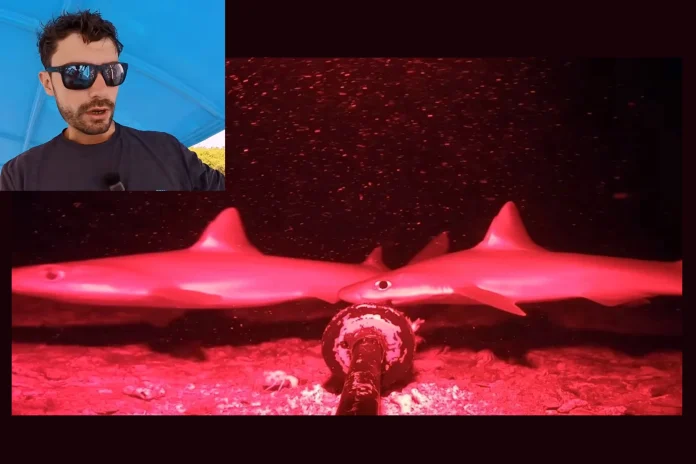
Barny Dillarstone, the UK-based YouTuber and filmmaker behind the popular channel @barnydillarstone, lowered his custom 20kg rig to approximately 700 feet (213 meters) near Nusa Penida — an island known locally as “Black Magic Island.” Using infrared lighting that minimally disturbs deep-sea creatures, the camera documented a rare glimpse into an ecosystem few humans ever see.
In the footage, a slender, roughly one-meter-long shark approaches the bait. After Dillarstone shared the clip with leading shark experts, the species was confirmed as Hemitriakis indroyonoi, the Indonesian Houndshark. Formally described in 2009 mostly from dead specimens found in fish markets and bycatch, the shark had never been reliably photographed or filmed alive in its natural deep-water habitat until now.
“These kinds of independent efforts complement professional research and bring rare marine life into public view,” experts involved in the identification have noted.
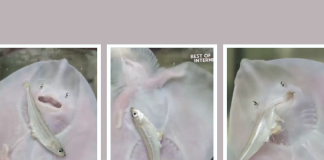
The main video, titled along the lines of “I Dropped a Night Vision Camera into the Deep Sea,” features the houndshark encounter prominently around the 9:41 mark. Over multiple drops, Dillarstone’s setup also captured moray eels, large stingrays (including one massive male powerful enough to keep sharks at bay), and what may be a Bluntnose Sixgill Shark — a primitive “dinosaur-era” species — lurking in the background.
Dillarstone’s signature method relies on accessible, affordable technology: action cameras paired with baited remote underwater video systems similar to those used in scientific research. Strong currents around Nusa Penida make traditional diving nearly impossible at those depths, making remote rigs an effective tool for exploration.
The Indian Ocean waters surrounding Indonesia are known for rich but under-documented biodiversity. With oceans covering roughly 70% of the planet and much of the deep sea remaining unexplored, independent projects like this are increasingly contributing valuable observations to marine science.
Dillarstone has shared additional clips and behind-the-scenes updates on his YouTube channel and Instagram.
For those eager to see the rare shark in action, the full expedition video is available now on Barny Dillarstone’s YouTube channel.