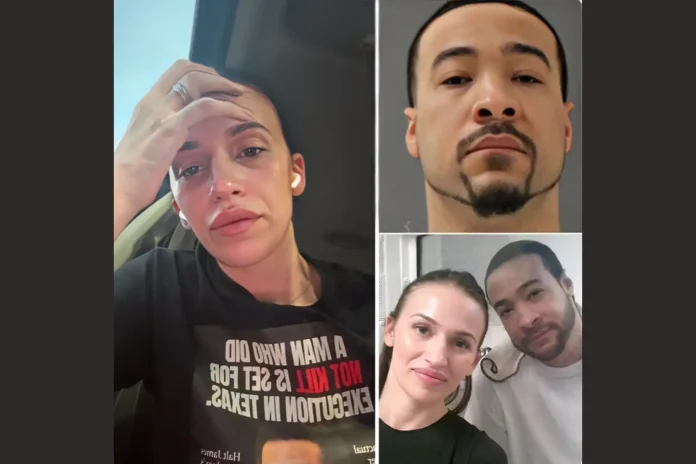
In the dying moments of Tiana Krasniqi in Texas’ Huntsville Unit in April 30, 2026, Tiana Krasniqi threw herself against the observation window. The 31-year-old lady shouted, “I love you!” repeatedly while her husband James Broadnax lay on the gurney being injected with the lethal drugs. She is alleged to have pounded the glass pane with stretched arms and wept before fainting and being helped out of the execution chamber. Broadnax who was 37 years old died at 6:47 p.m. after 21 minutes of the procedure.
Footage and reports from the viewing area captured the raw emotion. Krasniqi, who married Broadnax just 16 days earlier in a non-contact prison ceremony, watched as the drugs took effect. In his final statement, Broadnax said:
“Texas got it wrong. I’m innocent, the facts of my case should speak for itself.”
He also asked forgiveness from the victims’ families and sent love to supporters, including his wife.
Later on, Krasniqi reported that he had suffered throughout the entire process; however, the claims about a nosebleed and bruised neck cannot be corroborated by official records.
A tweet from X.
In 2011, Broadnax was found guilty of the double homicide that took place in 2008 in which two Christian musicians, Stephen Swan aged 26 and Matthew Butler aged 28, were killed. The murders took place during a robbery at a Garland recording studio. According to prosecutors, Broadnax and his cousin, Demarius Cummings, committed the robbery.
Broadnax had given earlier jailhouse interviews where he admitted pulling the trigger, statements he later attributed to being under the influence and trying to protect his cousin. Cummings received life without parole. Broadnax maintained his innocence in the end.
Broadnax’s legal team pushed final appeals citing new claims from cousin Demarius Cummings. In March 2026, Cummings reportedly confessed in a video declaration that he planned the robbery, supplied the gun, and was the actual shooter. Defense lawyers also pointed to DNA evidence found only on Cummings and the weapon, allegations of racial bias in jury selection, and the controversial use of Broadnax’s rap lyrics at trial.
Courts, including Texas Court of Criminal Appeals and U.S. Supreme Court, rejected the appeals on execution day, calling the cousin’s confession untimely and inconsistent with prior evidence. Texas Governor Greg Abbott did not grant clemency. Broadnax became the third Texas execution of 2026.
Krasniqi, from Lewisham in southeast London and a mother of one, first contacted Broadnax while researching racial disparities in the death penalty for her human rights law studies. Their connection grew through letters, calls, and visits. She moved to the U.S. and they wed on April 14 behind glass.
A shaky clip of her response raced across screens, sparking sharp responses everywhere. Brave, some said she was, staying beside him despite everything; still others wondered how anyone could tie their life to someone found guilty of two killings so close to execution day. Voices rose on social platforms some backing Broadnax’s plea of being wrongfully charged, while more pointed fingers at the odd timing of their union
Out of nowhere, the cousin admitted something yet stuck to saying they were innocent overall. Still, prosecutors didn’t budge one inch from that first verdict the jury handed down
This story highlights a deep divide inside America’s legal world. Though courts finished their work long ago, people still argue online because videos spread fast. Outrage grows when someone shares proof that feels important. Justice might be settled in law books yet remains unsettled in everyday talk. What happens in headlines often lingers far beyond courtroom doors.