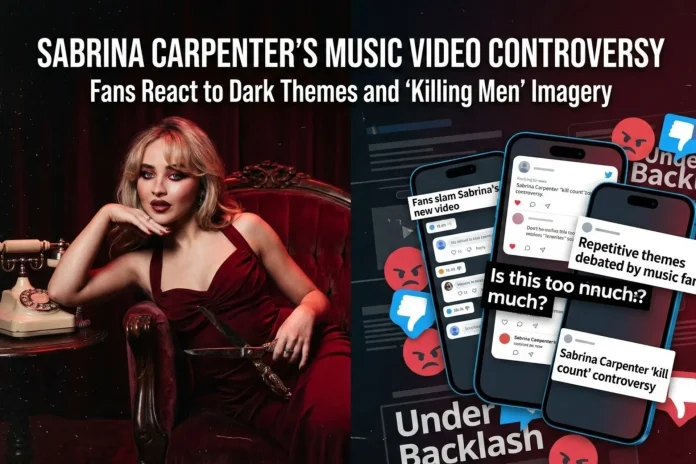
Grammy-winning artist Sabrina Carpenter is facing backlash from music fans who accuse her of repeatedly depicting the deaths of male characters across multiple music videos in a pattern some describe as promoting misandry.
A 40-second montage posted on X on March 9, 2026 compiled the most dramatic examples and quickly surpassed 1.5 million views while igniting heated debate. The clip pulls scenes from five official releases starting with Feather in October 2023 and continuing through Taste in 2024 plus Manchild and Tears in 2025. In Feather a male photographer is crushed when elevator doors slam shut on him as Carpenter performs unbothered nearby. Taste delivers a Death Becomes Her style sequence in which a curly-haired rival ends up floating dead in a pool with blood gushing dramatically from his body. Tears escalates the pattern by showing a man surviving an initial car wreck only to be fatally struck in the chest by a thrown stiletto heel while Carpenter maintains her signature empowered smirk. Manchild rounds out the series with further comedic fatalities aimed at cat-callers and man-children stereotypes that critics say complete her self-described feminist cinematic universe.
The recurring motif stems directly from themes of post-breakup empowerment following Carpenter’s split from actor Barry Keoghan in late 2024. She has explained in interviews that the deaths serve as satirical commentary on annoying male archetypes with the running joke that someone has to die in every video while women never do. This approach first surfaced in Feather and has since become a deliberate storytelling device across her visual work turning heartbreak into campy revenge fantasies that resonate with many listeners but strike others as one-sided.
Carpenter has extended the same tone beyond videos into her 2025 album Man’s Best Friend where she compares men to dogs in lyrics and artwork that sparked parallel accusations of misandry. Songs such as Manchild explicitly call out male immaturity and unwillingness to step up while the album cover imagery drew criticism for objectifying dynamics in a way some viewed as retaliatory. These elements mark the clearest examples of her leaning into anti-male tropes yet no prior incidents in her career from Disney Channel days through early music releases show similar patterns. The evolution appears tied to her personal experiences and creative freedom after achieving global stardom rather than any documented history of public statements or actions targeting men outside her art.
This wave of criticism highlights persistent double standards in pop culture where exaggerated violence in female-led satire often escapes the swift condemnation that male artists would encounter for comparable content. Male creators have long used dark humor in horror films and lyrics without equivalent industry-wide boycotts yet Carpenter’s consistent targeting has tested audience tolerance in the social media era. At 26 years old the former child star turned Grammy winner for Short n’ Sweet continues to dominate charts and conversations proving her provocative style drives engagement even as it divides viewers along gender lines.
Carpenter has not commented on the latest backlash leaving the conversation to unfold organically across platforms. Supporters praise the work as harmless fantasy while detractors point to real-world sensitivities around violence and gender. Stream the official music videos directly through Sabrina Carpenter’s YouTube channel.