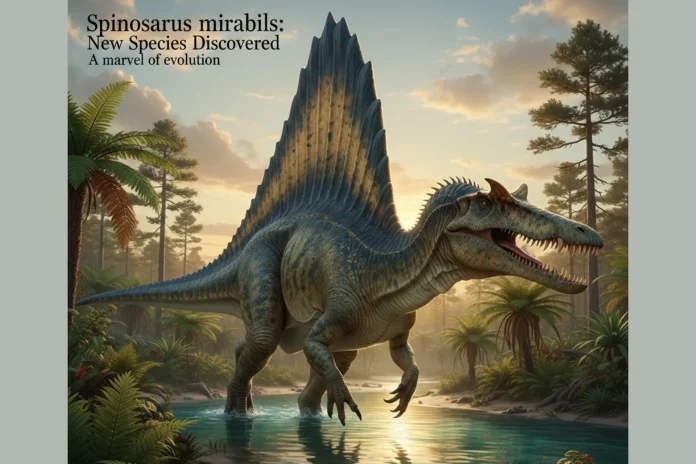
Paleontologists have unveiled Spinosaurus mirabilis, a newly identified dinosaur species from Niger’s Sahara Desert, featuring a dramatic scimitar shaped head crest and representing the first new Spinosaurus find in over 100 years. This massive predator, comparable in size to Tyrannosaurus rex, roamed riparian habitats 95 million years ago, equipped with conical teeth for capturing fish and a sail like back structure. The discovery, announced on February 19, 2026, stems from expeditions in 2019 and 2022 that recovered jaw fragments and other fossils from the remote Jenguebi site. Researchers describe it as a semiaquatic hunter, nicknamed the hell heron for its eerie profile and wading prowess in ancient waterways.
Led by Paul Sereno of the University of Chicago, the team of over 30 scientists endured challenging desert conditions to excavate these remains, which were found alongside sauropod dinosaur fossils in fluvial sediments. The crest, measuring about 20 inches tall, likely served for display or species recognition, while interlocking teeth suggest efficient prey capture in murky rivers. This inland location, far from coastal areas, indicates spinosaurids adapted to diverse ecosystems across Cretaceous Africa. Phylogenetic analysis positions Spinosaurus mirabilis as part of a stepwise evolution in the group, with increasing aquatic traits over time.
Sereno’s track record in African paleontology adds weight to this find, as he previously led the 2000 expedition that revealed Sarcosuchus imperator, an enormous crocodyliform dubbed SuperCroc, in the same region. That earlier discovery involved unearthing a 40 foot long beast weighing up to eight tons, with a skull over six feet long and teeth designed for crushing dinosaur bones. Sarcosuchus shared ecosystems with spinosaurids like those now linked to mirabilis, highlighting a vibrant prehistoric food chain in what was once a lush Sahara. These repeated successes underscore the untapped potential of Niger’s fossil beds for understanding Mesozoic life.
Envision these ancient giants in their prime, traversing a world where supercontinents like Gondwana still connected vast lands, allowing Spinosaurus mirabilis to stalk steaming river deltas from what is now Africa into emerging South American terrains, its scimitar crest slicing through dense fog as it lunged for shimmering fish schools. Meanwhile, Sarcosuchus imperator lumbered along interconnected waterways, its massive form displacing water in thunderous surges, ambushing unwary dinosaurs at bends where currents met lush fern forests, their roars echoing across a planet teeming with life before continental drifts reshaped everything. This creative glimpse, grounded in fossil evidence of shared habitats and migration patterns, paints a dynamic portrait of predators dominating a borderless prehistoric realm, where survival hinged on adaptability amid shifting climates and terrains.
Artist reconstructions vividly portray Spinosaurus mirabilis stalking river edges, its crest glinting under ancient skies.

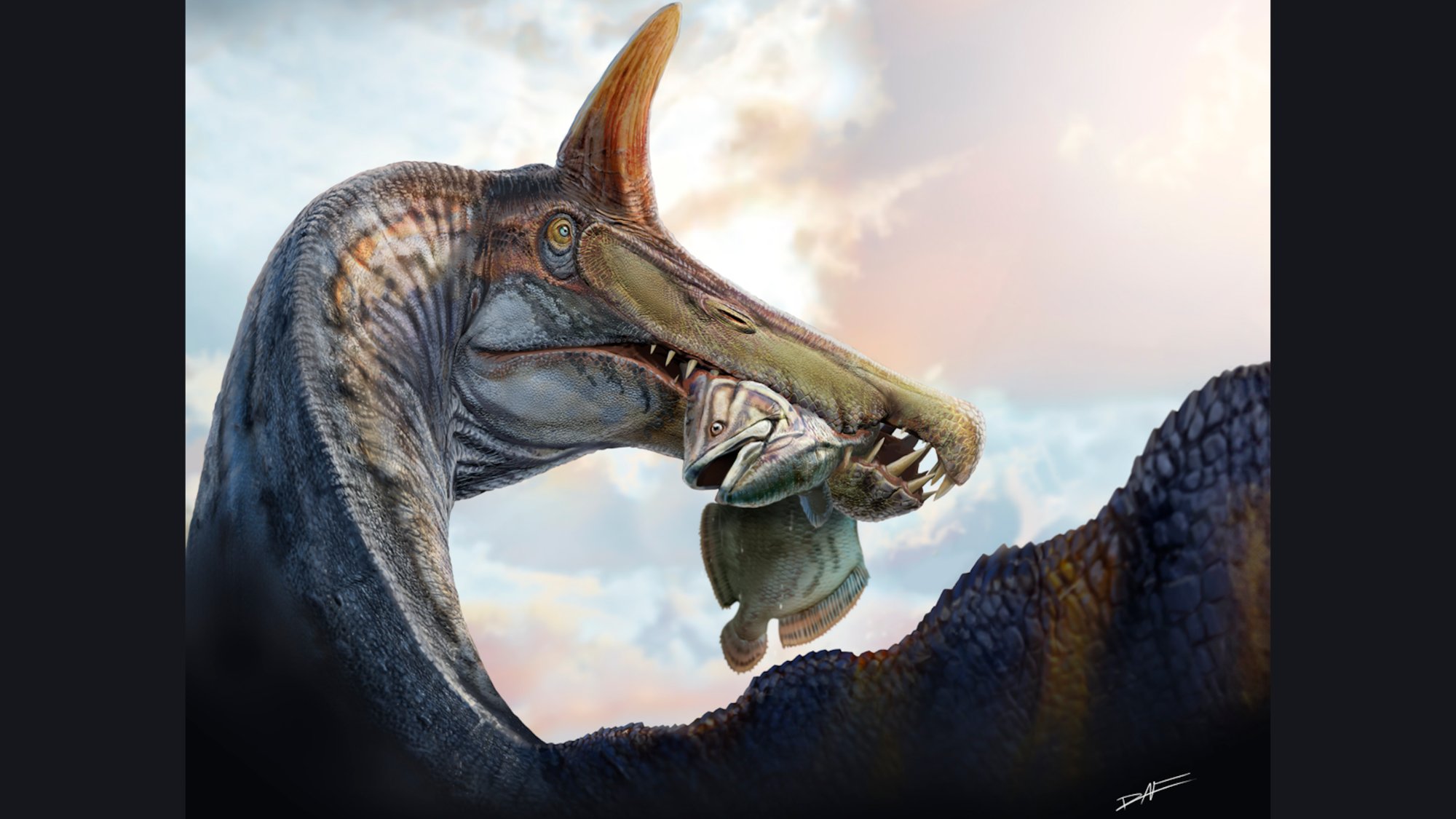
Similarly, Sarcosuchus fossils, including massive skulls, evoke a world where giant reptiles dominated waterways.

Such visuals help bridge the gap between raw bones and the dynamic creatures they represent, enhancing public engagement with science.
This latest revelation not only expands the spinosaurid family tree but also prompts fresh questions about dinosaur behavior in non marine settings, challenging assumptions about their habitats. By drawing parallels to modern herons, experts infer social or hunting strategies that made these animals apex predators. International partnerships, including with Nigerien authorities, prove essential for such remote digs, fostering global knowledge sharing.
For deeper insights, explore the original study in Science, University of Chicago’s details, Natural History Museum’s overview, and Sereno’s Sarcosuchus archive. Future expeditions could yield even more surprises, reminding us that Earth’s history still holds secrets in its sands.