

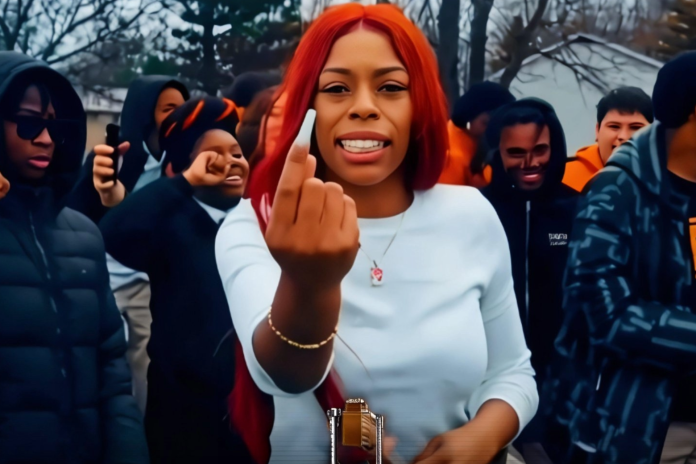
In the heart of Detroit’s vibrant music scene, a talented educator named Domonique Brown, better known as Drippin Honey, turned a painful professional setback into a powerful statement of resilience when she was ousted from her teaching role at Taylor Preparatory High School over her rap career. This clash erupted in early 2024 after an anonymous parent’s complaint highlighted her bold, profanity-laced tracks as a potential bad influence on students, despite her acclaimed seven-year tenure and recent Teacher of the Month accolade. Brown’s refusal to scrub her online presence led to her resignation on January 24, 2024, which she framed as a firing, sparking widespread debate on personal freedom versus school standards.
The saga began in October 2023 when the unnamed parent stumbled upon Brown’s rap videos and alerted administrators, igniting a series of grueling meetings that stretched over five months. As a single mother pursuing advanced degrees, Brown balanced her classroom duties with her passion for hip-hop, drawing from Motown’s legacy to craft lyrics that celebrated hustle and community. School officials, managed by National Heritage Academies, insisted on maintaining a code of conduct focused on a distraction-free zone for students, ultimately presenting her with an ultimatum to delete her content or leave. Brown chose authenticity, walking away with her head high and channeling the experience into her art.
On her final day, Brown transformed the school’s hallways and classrooms into a makeshift studio, enlisting over a dozen enthusiastic former students to star in the “Drippin 101” music video, a defiant anthem that blended education themes with street-smart bravado. The track, part of her EP “Honey Economics,” features energetic verses where Brown raps about grinding through adversity, with students hyping the chorus in joyful unity. Visually, the video captures dynamic shots of kids in casual hoodies and school uniforms dancing amid desks and blackboards, their smiles and gestures radiating the genuine bond Brown fostered, all set to a bass-heavy beat that echoes Detroit’s rhythmic pulse. This collaboration not only promoted her music but also served as a tribute to her impact, aimed at inspiring young dreamers and calling out institutional rigidity.
Diving into the lyrics of “Drippin 101,” Brown’s words paint a vivid picture of perseverance and pride:
Baby going crazy like the 80s / Baby going crazy like the 80s / I put it on the floor when I dare 'em to take it / Run around the city, owe me money, ns is silly / My money just like hoes, I got the power and the juice / Talking s, I'm 42 / Online this n*** texting me but I ain't never got the time / He say I'm doing big, I'm always on the grind / I'm just getting started if a n**** think I'm lyin' / The money's where my mind at / Got that raw honey, you can find me with a hi-hat / Real recognize real, who the f*** is y'all? / That n**** play and I watch him drop the ball / N*s want to blame me, how the f you fall? / My back against the wall, run it up till I can't no more / I ain't no rookie, I'm the seats in the front but my eyes get low / Everything I touch, I get everything I touch though.The chorus repeats with infectious energy, while later verses shout out her Detroit roots: "From the 75th to the 313 / These hoes mad 'cause they hatin' on me / These ns stuck on me / I'm in the A, headed back to the DTE / I'm big drip, hoe, CC me / On another level that they really can't believe / Car these ns 'cause I'm TTG / It's family, I should call this s*** just like me / Get money, that's a TP / I ran it up like yeah, we go big / Watching n****s scheme at me." It closes with a unifying chant: "We going to hold me down / We going to hold me down / We going to hold me down."
These lines, performed for her fans and the broader hip-hop community, underscore themes of self-empowerment and loyalty, reflecting how she turned personal turmoil into motivational fuel.
The public outpouring was swift and supportive, with the video racking up over 427,000 views on YouTube and social media erupting in praise for Brown’s stand. Over 200 parents and students rallied with petitions, while online comments lauded her as a relatable role model who went beyond the curriculum by attending games, offering tutoring, and providing everyday support. Sentiment tilted positive, with calls for legal recourse dominating discussions, though a minority questioned if her explicit content crossed lines for educators. As of 2026, no lawsuit resolution has surfaced in public records, but Brown’s career thrives with new releases and personal growth posts on platforms like X.
Reflecting on this two years later, the verdict here at Hypefresh is clear: the school’s move was a misguided overreach that undervalued Brown’s multifaceted contributions and stifled cultural expression in a city built on musical innovation. By prioritizing one anonymous complaint over her proven dedication and the chorus of support from those she directly influenced, administrators missed an opportunity to embrace diversity in education, potentially deterring other creative talents from the field. Ultimately, stories like Brown’s remind us that true educators inspire beyond textbooks, and her triumphant pivot to full-time artistry proves resilience wins. For more on similar cases, check Michigan court dockets or support her via GoFundMe.

