

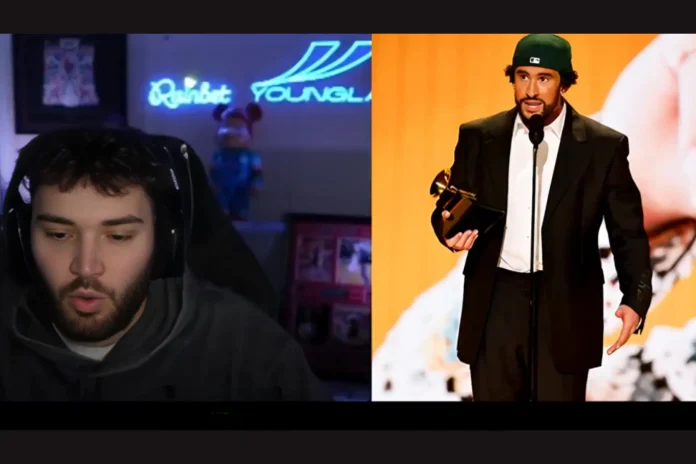
The city of Los Angeles shone bright on February 1, 2026, as the 68th Grammy Awards took place. Celebrities walked the red carpet at Crypto.com Arena, flaunting their designer clothes and bright smiles. Trevor Noah hosted the event with his jokes from the stage, while social media went haywire with reactions, and winners such as Kendrick Lamar topped the headlines. However, two weeks later, on February 14, a 33-second video clip from Kick streamer Adin Ross’s broadcast reposted by @AkademiksTV shook the world. In low-res vertical format, Ross ranted casually yet emphatically:
“It’s all a distraction.”
Ross didn’t hold back. He accused the Grammys of being pumped up as a media spectacle to drown out the U.S. Department of Justice’s massive dump of Jeffrey Epstein documents just days earlier.
“The Grammys are essentially a staged distraction designed to overshadow or bury the release of the Epstein files,”
The post’s caption summarized, echoing Ross’s words. He tied it to elite tactics, slamming Hollywood hypocrisy where figures mentioned in the files like Pusha T still hit the red carpet and snagged awards, such as Best Rap Performance for “Chains & Whips” with Pharrell and Kendrick. Ross even said he’d drop support for Donald Trump if proven ties emerged:
“If Trump was on the island, then absolutely call him out too.”
The claim revolves around the Epstein Files Transparency Act, which was signed by President Trump on November 19, 2025. In simple words, this bipartisan act compelled the DOJ to make available unclassified documents from Epstein’s sex trafficking investigations, which could then be searched online. The big drop occurred on January 30, 2026, with over 3 million pages, along with 180,000 images and 2,000 videos. These included everything from flight records and emails to interview summaries, which included politicians such as Trump and Clinton, celebrities such as Jay-Z and Leonardo DiCaprio, and many more, although no wrongdoing is implied by mere mentions. Redactions were done to ensure the privacy of victims, but the DOJ was criticized for its lack of transparency, with a possible 6 million pages at stake.
A tweet from X.
Grammy dates get locked in 12-18 months ahead by the Recording Academy, based on venue bookings and TV deals.
No official evidence points to coordination between the awards and the document rollout.
In America’s 24/7 news grind, award shows like the Grammys suck up oxygen. Headlines flood with celeb drama, performances, and snubs. Social algorithms push viral moments, from Noah’s Epstein jab at Trump (which sparked a Truth Social rant and lawsuit threat) to Billie Eilish’s “ICE Out” pins. When big news overlaps like Epstein files dropping Friday before Sunday’s show it sparks online theories. No proof needed; distrust brews fast in echo chambers.
Public pushback splits the room. Supporters rally behind Ross, venting frustration over elite accountability gaps.
“He’s highlighting real hypocrisy,”
One X user posted. Critics fire back: Grammys follow a fixed first-Sunday-in-February slot since 2004, and judicial releases run on independent tracks.
“Timing’s coincidental, not conspiratorial,”
A Reddit thread argued.
This is reminiscent of past scandals, where tight timelines are the fuel for unsubstantiated claims. For example, the death of Epstein in 2019 coincided with large events, yet there were no connections that withstood scrutiny by sources such as Vanity Fair. In this case, the DOJ’s own words on justice.gov emphasize statutory deadlines rather than showbiz timing.
Bottom line for Americans: The Epstein files are legit, packed with real revelations demanding scrutiny. The Grammys rocked on as planned. But connecting the dots as deliberate? No credible reporting backs that. Focus on facts over frenzy separate coincidence from cover-up.

