

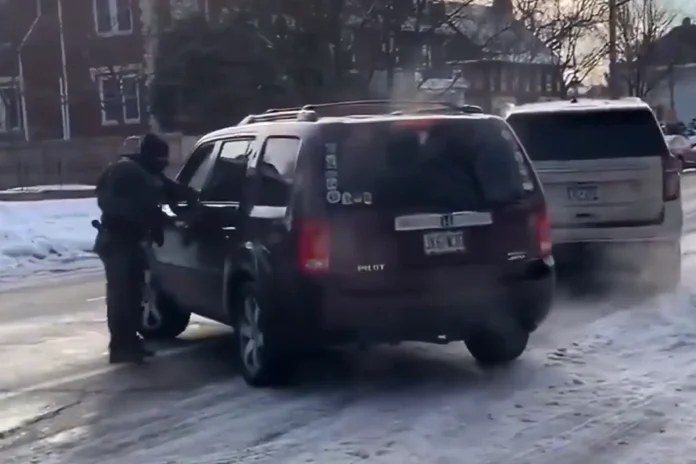
Snow dusted the streets of south Minneapolis on the morning of January 7, 2026. Near the intersection of East 34th Street and Portland Avenue, federal agents in tactical gear moved through a residential neighborhood. Unmarked vehicles blocked roads during an ICE operation. Smoke from deployed grenades hung in the air, mixing with shouts from bystanders and protesters. Then came the crack of gunfire. A 61-second bystander video, shared on X by @mymixtapez, caught the turmoil: agents surrounding a dark SUV, commands barked out, shots fired, and cries of horror as the driver slumped inside.
A tweet from X.
Bystanders yelled accusations like “You shot her!” and “She wasn’t doing anything!” The clip ends with raw panic spreading through the crowd.
The footage reveals agents approaching the SUV, one trying to open the door. The vehicle backs up slowly, then shifts forward. Gunshots follow reports say three fired through the driver’s side window. Smoke obscures parts of the view, and the camera’s distance hides details like exact movements or impacts.
Audio picks up screams and outrage, but the precise moment the bullets hit isn’t clear. Viewers interpret it differently: some see a threat to officers, others a panicked attempt to flee. This ambiguity fuels debates, showing how partial views can spark conflicting conclusions.
Renee Nicole Good, 37, a U.S. citizen and mother of three, died from gunshot wounds while in her Honda Pilot. She lived nearby and was not the ICE operation’s target. The Minneapolis shooting happened around 9:30 a.m. during a large-scale immigration enforcement raid involving up to 2,000 agents.
Good, originally from Colorado Springs, was pronounced dead at Hennepin Healthcare after being struck in the head. Family described her as “an amazing human being” who was “caring for her neighbor” at the time. Her mother, Donna Ganger, told reporters Good was “probably terrified” and not involved in any protest.
Federal officials from DHS and ICE maintain the agent fired in self-defense. They say Good “weaponized her vehicle” in an “act of domestic terrorism,” attempting to ram officers after ignoring commands. DHS Secretary Kristi Noem defended the action, stating the officer
“followed his training.”
Local leaders push back. Minneapolis Mayor Jacob Frey called the self-defense claim
“bullshit” and a “garbage narrative,”
demanding ICE
“get the f*ck out of our city.”
Governor Tim Walz labeled it “propaganda” after reviewing video, saying the SUV moved slowly with no clear threat. Witnesses noted agents delayed medical aid, even blocking a doctor on scene. These disputes highlight questions over use of force and officer positioning.
Protests erupted immediately, with crowds gathering for vigils near the site less than a mile from where George Floyd died in 2020. Hundreds chanted against ICE, some clashing with agents who used chemical irritants. Solidarity events spread to New York.
City and state leaders condemned the raid in this sanctuary city. Walz activated National Guard preparations amid tensions. Nationally, figures like Rep. Ilhan Omar called it “delusional,” while supporters like President Trump backed the agent for officer safety.
Viral clips like the @mymixtapez video spread rapidly on X, outpacing full reporting. Short footage often misses context, such as prior commands or full vehicle paths. Emotionally charged posts amplify divisions one side sees justified defense, the other excessive force.
Responsible coverage relies on multiple angles and sources to counter misinformation. Outlets like The New York Times note how videos support varied interpretations, urging caution in quick judgments.
The incident underscores debates over ICE operations in sanctuary cities like Minneapolis, amid federal crackdowns on immigration. It raises issues of public trust in law enforcement and the role of bystander video in shaping views powerful for accountability, yet limited without full facts.
A federal investigation by the FBI and state probes continue. As details emerge, the story may shift, reminding us that initial accounts often evolve.
 officer in Minneapolis. Viewer discretion advised.)