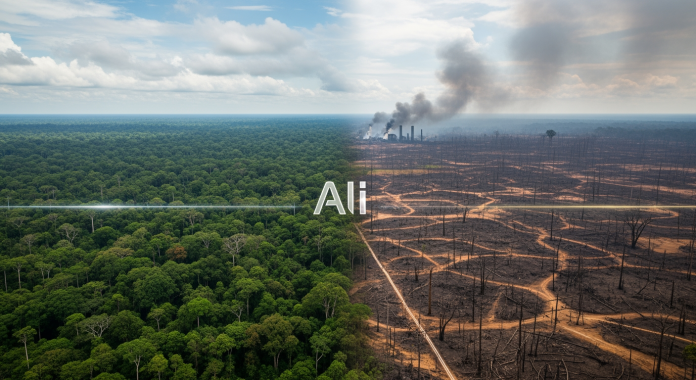
An **AI-generated video** realistically depicting the effects of deforestation has gone viral, igniting widespread discussion about environmental destruction and humanity’s role. Shared across social media platforms, the video uses advanced technology to visualize the urgent crisis, prompting viewers to confront ecological challenges and consider the ethical implications of human actions.
This **viral AI video** demonstrates artificial intelligence’s capacity to create compelling content. It offers a stark portrayal of deforestation, employing detailed visual techniques to illustrate the loss of forests and their environmental consequences. The AI’s ability to render complex scenes effectively communicates the urgency of **climate change awareness** and environmental degradation, reaching a broad audience. This visual method is proving effective in capturing attention and delivering its message.
Creators used advanced AI tools to generate imagery of environmental destruction, making it both impactful and precise. The AI’s capacity to produce realistic and emotionally resonant content strengthens the message’s resonance with viewers. Specific techniques, like the detailed depiction of deforestation, highlight ecological impacts with clarity, making the consequences of human actions readily apparent. The AI’s narrative choices, including scene selection and sequencing, also play a key role in amplifying the video’s message.
The core of the **AI deforestation video** addresses humanity’s role in environmental damage and the need for immediate action. It prompts profound questions about our relationship with nature and the ethical responsibilities tied to our actions. The video directly connects human activities with environmental challenges, from deforestation to pollution, encouraging viewers to critically assess their **human impact pollution** on the planet.
Using AI as an advocacy tool represents a significant evolution in **environmental advocacy** campaigns. It highlights AI’s potential to raise global consciousness and inspire action on climate change. This technology moves beyond the limitations of traditional media, offering immersive experiences that can reach a broad audience. Through **digital art activism**, advocates can address challenges like visual information gaps or difficulty capturing a distracted audience’s attention.
Beyond the screen, the video is leading to tangible real-world responses. Organizations and individuals are discussing concrete steps to address deforestation and pollution. The video has fueled a global conversation, encouraging people to engage in environmental activism and promote sustainable practices. It is prompting communities to focus on immediate action and implement changes to protect the planet.
This **AI-generated video** serves as a powerful reminder of the climate crisis’s urgency and the importance of collective action. Its viral reach underscores technology’s evolving role in **environmental advocacy**. The content highlights the need for innovative approaches to environmental challenges and movement toward a sustainable future. The impact of such visual tools aims to heighten awareness and encourage sustainable practices to mitigate environmental damage.