

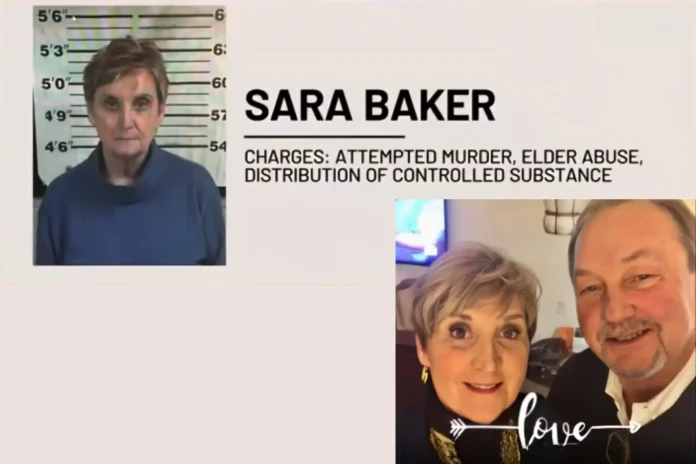
In the heart of Cullman County, Alabama, a seasoned lawyer once dedicated to justice now stands accused of plotting a lethal betrayal against her own spouse. Sara Baker, a 74-year-old attorney with decades of experience, allegedly conspired to poison her husband, James Doyle Baker, by slipping fentanyl into his food and drinks on multiple occasions. This disturbing turn of events unfolded over several months in 2025, shaking the local community and raising questions about hidden dangers in close relationships. Authorities arrested Baker on November 25, revealing a case that blends personal caregiving with calculated harm.
The alleged attempts targeted specific dates in September: the 4th, 12th, and 20th, when Baker reportedly added the potent opioid to her husband’s meals or beverages. Court documents outline a conspiracy involving at least one other individual to obtain the drug, aiming to cause death or severe impairment. James Doyle Baker, a former Auburn University football player who suffered a stroke years earlier, relied on his wife as his primary caregiver, which amplified the vulnerability in their household. The plot spanned from early September to late November, culminating in Baker’s arrest after an intensive investigation.
Baker faces a total of 11 felony charges, including conspiracy to commit murder, three counts of attempted murder, unlawful distribution of a controlled substance, second-degree elder abuse, second-degree domestic violence, and four counts of solicitation to commit a controlled substance crime. She posted a $400,000 bond and secured release from custody the day after her arrest, with her legal team promptly requesting a preliminary hearing. Due to potential conflicts stemming from her long career in local criminal defense, the Alabama Supreme Court appointed a special judge, Franklin County District Judge Jamie Sumerel, to oversee the proceedings. No trial date has been set yet, as the case remains in its early stages with ongoing investigations.
Details on how the scheme came to light remain sparse, but the Cullman Police Department led the probe with support from the district attorney’s office and federal task forces. A key witness, Felisha Nichole Cofield, a 39-year-old former client of Baker’s, emerged in connection with the case, having faced her own drug-related charges earlier in the year. Authorities have not disclosed a specific motive, though the charges emphasize the husband’s elderly status and the physical or mental harm inflicted. The involvement of federal agencies suggests possible broader elements, such as interstate drug sourcing, adding depth to what local officials describe as an unusually bizarre situation.
Sara Baker’s background as a former assistant district attorney in the 1990s and a 2004 Democratic candidate for Cullman County District Attorney contrasts sharply with these accusations, highlighting how professional expertise does not immunize against personal turmoil. Her husband, nearing 30 years of marriage with her, represents a vulnerable elder whose health challenges may have played into the dynamics at home. Cofield’s role as a witness suggests potential overlaps between Baker’s legal practice and the conspiracy, although these connections remain unconfirmed publicly. This incident highlights the importance of vigilance in caregiving relationships, particularly among the elderly.
This case spotlights the lethal risks of fentanyl, a synthetic opioid far more substantial than many realize, which can cause rapid overdose even in tiny amounts when ingested unknowingly. It also draws attention to the broader issue of elder abuse, where trusted family members sometimes exploit positions of power, leading to hidden suffering in households across the nation. In Alabama, laws like those outlined in the state’s criminal code impose strict penalties for such acts, aiming to protect the elderly from intentional harm or neglect. Journalistic scrutiny reveals how opioid accessibility intersects with domestic disputes, urging communities to prioritize prevention and support systems to avert similar tragedies.
