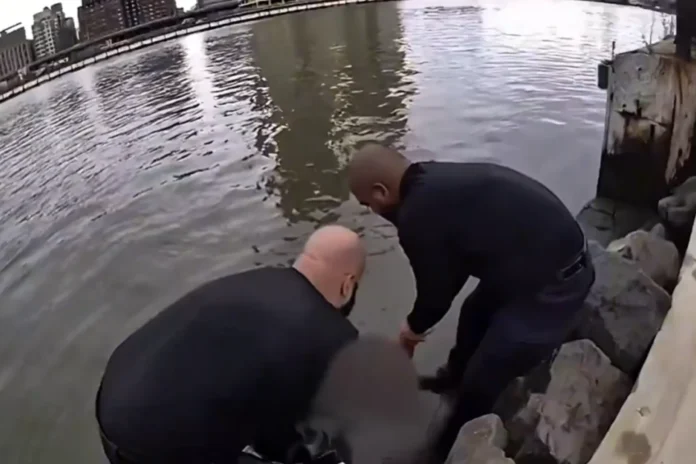
A 44-second bodycam clip showing an NYPD officer diving into the icy Harlem River to save a 16-year-old girl has spread rapidly online, reminding viewers of the split-second decisions first responders make in mental-health emergencies.
The footage, released by the New York Police Department, shows the moment three officers from the 32nd Precinct in Upper Manhattan pulled the teenager to safety after she entered the freezing water on November 11, 2025, in an apparent suicide attempt.
Around 2 p.m. on November 11, Officers Wilmer Guerrero, Ankit Gupta and Shuaibul Amine answered 911 calls regarding a girl who threatened to jump near East 142nd Street and Harlem River Drive. She entered the river before they arrived.
Without life jackets or cold-water gear, Officer Guerrero took off his duty belt and dove in. Bodycam video shows him swimming about 20 feet through near-freezing water to reach the struggling teen. Officers Gupta and Amine lay flat on the rocky embankment, forming a human chain to haul both Guerrero and the girl to shore.
“She’s out! Get blankets!”
One officer shouts in the clip as paramedics rush to the scene. The teenager, conscious but shivering violently, was wrapped in jackets and taken to NYC Health + Hospitals/Lincoln in stable condition.
NYPD Commissioner Jessica Tisch later praised the officers, calling the rescue
“a testament to our officers’ heart” and “a remarkable example of the dedication our officers show every day.”
The 44-second clip is raw, chest-mounted bodycam footage filmed in portrait mode. It includes clear radio traffic — “Central, be advised we have one MOS in the water” along with urgent commands and splashing sounds. There is no music or narration, giving viewers an unfiltered look at the operation.
The NYPD released the video on November 13 to highlight the officers’ actions. None of the three officers are part of the department’s Harbor Unit and had no specialised water-rescue equipment..
On November 17, the account @DramaAlert posted the clip to X with the caption:
“NYPD officer risked his life jumping into freezing water to save a s*icidal 16 year old girl.”
The post quickly gathered nearly 30,000 views, 970 likes, and dozens of replies.
Most comments praised the officers “true hero,” “didn’t even hesitate,” “someone give this man a raise.” A smaller number expressed cynicism about policing in general or questioned intervening in suicide attempts. Overall, the reaction online has been overwhelmingly positive toward the officers.
Cold-water rescues carry serious risks of hypothermia for both victims and rescuers; even brief immersion below 50 °F (10 °C) can impair muscle function within minutes. In New York City, youth suicide attempts remain a persistent concern. Recent health-department data show that roughly one in ten high-school students statewide reported attempting suicide in the past year.
Stories like this one highlight the role patrol officers often play as first responders in mental-health crises, while underscoring the need for accessible support.