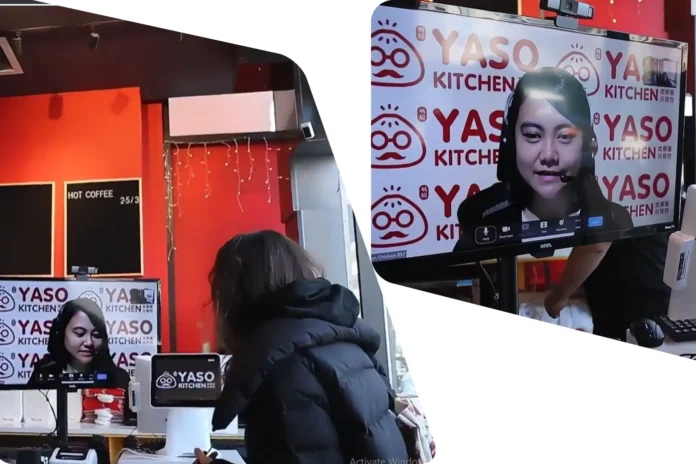
Customers in New York City expect quick service and a personal touch when grabbing a bite to eat. Still, they now face video screens where cashiers halfway across the globe handle their orders for wages that barely cover the basics back home. This setup lets eateries slash labor costs in a city where every penny counts amid sky-high rents and staffing woes. Yet it raises tough questions about fairness when local job seekers watch opportunities slip away to remote workers earning just $3.25 an hour.
The system works through large monitors at the counter, connected live to Filipino staff who guide orders, suggest menu favorites, and process payments from their home setups. Spots like Sansan Chicken in Queens and Yaso Kitchen in Manhattan lead the charge, blending self-service kiosks with these virtual faces for a hybrid feel. Restaurant owners say it keeps lines moving without the hassle of hiring on-site staff, especially during peak hours when turnover is high.
On one hand, this model saves businesses up to 90 percent on front-of-house pay compared to New York’s minimum wage of $16.50 an hour, freeing up funds to stay afloat in competitive neighborhoods. For the remote workers, the rate doubles typical earnings in the Philippines National Capital Region, where daily minimums hover around $12 for a full shift, offering steady remote gigs in a tough job market. Still, critics point out it sidesteps U.S. labor protections entirely, since these employees operate outside state borders.
Tips add another twist, with screens prompting an 18 percent add-on that flows partly to the overseas cashiers, turning diners into unwitting boosters of the low base pay. One viral clip from last week shows a customer asking if people tip often, only to hear the cashier admit that it happens sometimes, but not always, depending on their mood. This reliance on customer generosity highlights how the savings come at the expense of consistent income for those on the line, even as it personalizes the exchange with friendly banter about spicy noodle specials.
From my vantage point, covering labor shifts in urban dining, this trend highlights a deeper rift in how globalization reshapes everyday work, prioritizing efficiency over equity in ways that echo broader debates on outsourcing. Experts warn it could erode community ties in service roles while exposing remote staff to burnout from odd-hour shifts, as detailed in analyses of virtual work ethics. Lawmakers might step in soon to plug these gaps, but for now, it forces us to weigh innovation against the human toll.
The service provider behind it all, Happy Cashier, markets the tech as a lifeline for small operators, yet expansions remain spotty amid public pushback. Diners report mixed vibes, with some appreciating the no-nonsense speed and others missing the warmth of in-person chats that build neighborhood loyalty. As more chains test this, the real test will come in whether it boosts bottom lines without hollowing out local employment pipelines.
This is what happens when businesses chase cheap labor over American jobs. Virtual cashiers at $3.25/hr might cut costs, but at what cost? Communities and real people need those jobs. A shocking display of globalization gone too far.