

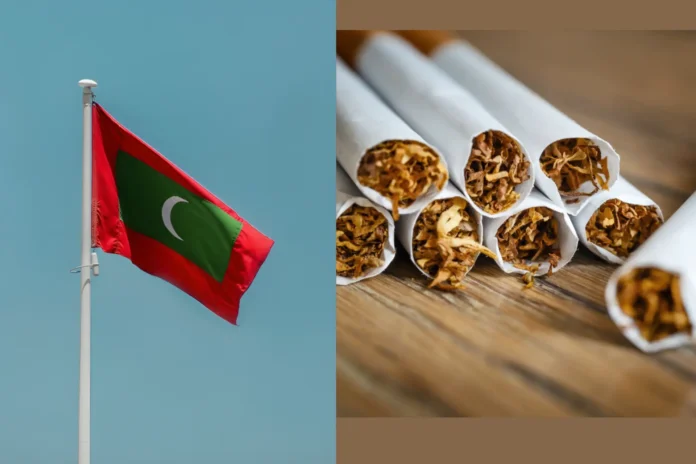
Down in Malé’s crowded markets, a teenager from 2008 grabs his phone and posts a funny meme about skipping out on smokes forever. It’s the kind of online buzz that’s spreading fast, showing just how this new law is shaking things up in the Maldives’ fight against tobacco.
It has rolled out its generational smoking ban effective November 1, 2025, through amendments to the Tobacco Control Act. That is, a ban on the sale, possession, or use of products such as cigarettes or shisha by anyone born on or after January 1, 2007. Signed by President Dr. Mohamed Muizzu back in May 2025, it will be enforced by the Health Ministry. Everyone is targeted-from the locals to the about 1.8 million tourists that come annually. Break it, and you may be slapped with a fine of up to 50,000 Maldivian Rufiyaa, or about $3,200.
A tweet from X.
It’s all aimed at tackling the high smoking rates among adults, sitting at 25-26%, some of the worst in Asia per WHO stats. Tobacco kills eight million people worldwide annually, 1.3 million due to secondhand smoke alone, which is a big deal for a place like the Maldives that has stretched healthcare.
New Zealand tried something like this in 2022, planning to block sales to folks born after January 1, 2009, but they ditched it in 2023 when politics shifted. The Maldives didn’t back down, though, and their ban fits right into the WHO Framework Convention on Tobacco Control, something they’ve been part of for years.
Nations elsewhere are paying attention. Over in the UK, there’s talk of a ban for those born after 2008, but groups like British American Tobacco are pushing hard against it. France has been looking into limits for people born after 2014, based on recent talks in parliament. It’s clear there’s a bigger movement building to phase out tobacco step by step.
“Protecting future generations from health and economic harms”
Is how Health Minister Maryam Mariya Rasheed put it. And Ahmed Afaal, who’s vice chair of the Tobacco Control Board, said the 2024 vaping ban before this was “a crucial step toward a tobacco-free generation,” especially to stop companies targeting kids.
People’s takes on this are all over the place, blending backing with doubts. On X, those born in 2006 are making jokes about taking their “last legal puff,” and there’s speculation about how it will work for tourists in places where booze flows freely. A user like @NOBLE wondered whether it’s opening the door to curbs on other things, pointing out the pull between better health and folks’ rights.
Afaal and other tourism folks say it won’t scare off visitors-the industry is 28% of GDP, and people go for the “beaches, sea, sun, and fresh air.” So far, bookings haven’t dipped, but some experts point to risks such as smuggling from India or Sri Lanka sneaking in.
Those illnesses tied to tobacco drain about $10-15 million a year from the Maldives in medical costs and lost work, drawing from WHO numbers for places like it. The ban’s meant to cut that down, even if taxes from smokes take a hit short-term.
This whole thing puts public health moves to the test in an economy hooked on tourism. A piece in The Guardian noted it might spark more laws like it, but the flip-flop in New Zealand shows how shaky politics can make these. With tobacco companies still lobbying everywhere, the Maldives is setting an example yet keeping it going will be the real measure of success.
