

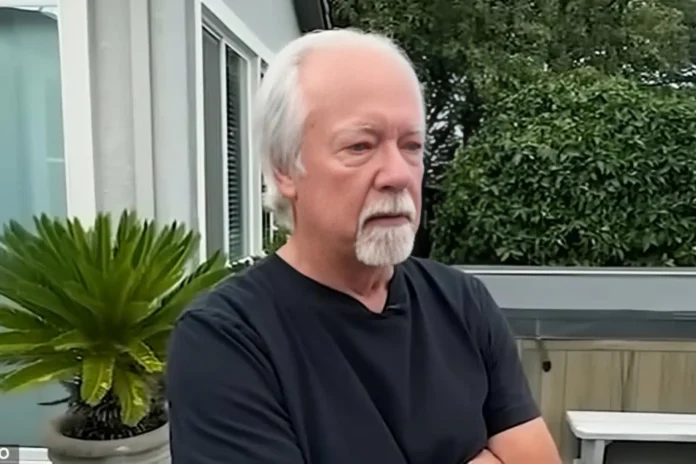
Out in Brentwood, California, a quiet spot where people generally kept to themselves, Larry Sorenson was dealing with the kind of heartache that doesn’t let up. His wife Rhonda had just died from cancer back in December 2024, after they’d spent 35 years together.
“I cried every day. It was real love,”
he told ABC7 News during an interview. At 71, this retired guy who’d run a roofing business was suddenly all by himself, with grief hanging over everything like a fog. That changed in July 2025 when a random text came up on his phone from some stranger. It was innocent enough: wrong number from a woman who identified herself as Tina. They started chatting back and forth, and before long, it was a daily thing that gave him a bit of comfort in those lonely times.
A tweet from X.
Tina spun these tales about her fancy life, talking up her real estate deals, some wineries she supposedly owned, and all sorts of crypto stuff. She bragged about driving a Rolls-Royce Cullinan and having this huge $10 million stash in cryptocurrency, with tips coming from an aunt over at Morgan Stanley.
“She was telling me how she had $10,000,000 in her crypto account. She showed me where she had traded 3,000,000 and got 1,000,000. And this happens like in five minutes,”
Sorenson remembered. Pretty soon, their talks shifted over to WhatsApp, full of sweet notes like “Good morning, sweetheart.” He got so wrapped up in it that he dropped 30 pounds, figuring he’d look better if they ever met up. But things took a turn when the affection started mixing with talk about money. Tina got him into crypto investing, easing him in with fake practice runs on sites like Coinbase and Crypto.com.
“She guided me to wire money from my bank to Coinbase to Crypto.com. They’d say, we need to prepare, open your on-chain and send me a screenshot. And she would show me on the screenshot which one to click,”
He said, explaining how it all went down. Those phony screens made it seem like his money was exploding in value his first chunk of $500,000 from the IRA looked like it hit $1.2 million, and kept climbing.
“It looked like the money was coming in large amounts. She kept trying to get me to put more money into this account because it could get like 50% return,”
Sorenson added. He bit, sending over another $500,000 and wiping out his whole $1 million retirement fund. Tina didn’t stop there she nagged him to scrape together more cash from his house, buddies, or relatives. That’s when he turned to his stepdaughter Megan.
“I said, Megan, you don’t have a couple hundred thousand dollars you’d be able to throw in this? If you knew you could make a profit off it.”
She broke down in tears and shot back,
“Larry, this is a scam.”
By the time they went to pull the money out, it was all gone. Sorenson ended up with nothing, plus a whopping $400,000 tax hit from yanking cash out of his IRA early, which might mean selling his place just to stay afloat. The whole setup was a classic “pig butchering” con, where these crooks spend months earning your trust usually with a fake romance angle before they bleed you dry through bogus investments. A lot of these rings operate from abroad, preying on folks who are hurting emotionally, like from grief or being alone.
These kinds of tricks are popping up more and more. According to the FBI’s 2024 report on internet crimes, people lost $5.8 billion to crypto investment swindles, many tied to romance setups, and folks over 60 got slammed the worst with $2.8 billion gone. A study from AARP in 2023 pointed out how grief can make seniors twice as likely to fall for this stuff, since it messes with clear thinking. Experts on cybercrimes break it down like this the bad guys play mind games, building up that bond first, then pushing harder for bigger investments on made-up sites. FBI folks who handle fraud say getting the money back is tough because crypto is so hard to track. And those fake apps? They copy real ones, flashing pretend profits to suck people in deeper.
What happened to Sorenson points to bigger problems with how we protect against this, especially since these global outfits slip past the cops so easily (check out the FBI’s IC3 details over at ic3.gov). Still, even in the mess of it all, he’s got a message for others:
“What I’ve done has completely flipped my life upside-down. Be cautious online verify investments through trusted sources before sending a dime.”
It’s a tough lesson, but one that shows how in today’s world, reaching out online can hide real dangers, and staying alert is what keeps people safe.
