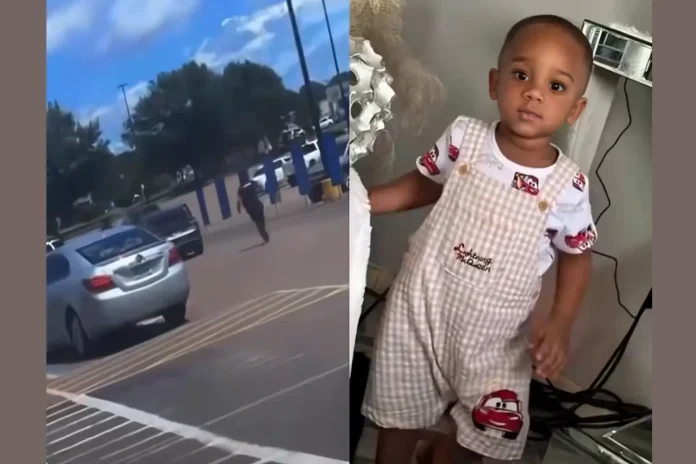
On a sunny afternoon in the Walmart parking lot along U.S. 51 in Senatobia, Mississippi, bystanders pulled out their smartphones. Flashing police lights cut through the scene as officers responded to a call. Shaky handheld footage shows cars, people moving around, and the aftermath of the response. Side by side, a smiling photo of 1-year-old Kohen Wiley in his Lightning McQueen checkered overalls and white graphic t-shirt offers a heartbreaking contrast.
A tiny child named Kohen Wiley lost his life at just one year old when police shot at a car on June 14, 2026. Close to two o’clock, the sky hung thick above the street. A grown person inside the van could barely move, hurt too badly. Officers pulled triggers when things turned sharp. The air cracked with gunfire as it unfolded.
A call about stolen diapers brought police from Senatobia and deputies from Tate County to the scene. MBI says they saw two grown people with a young kid climbing into a gray four-door car. Suddenly, the vehicle sped up, coming close to hitting an officer, which led to gunfire. Shots were fired after the car moved fast in the direction of law enforcement. The vehicle then drove to a hospital, where Kohen was pronounced dead.
Kohen’s mother, Vellesiya Wiley, disputes key details. She says there was no theft and that she had proof of purchase. In a public video, she described lifting Kohen to show officers a child was inside the car. The family, represented by civil rights attorney Ben Crump, maintains the vehicle was moving away from officers, not toward them.
Body-camera footage, dash-camera recordings, witness interviews, and Walmart surveillance video have not been released publicly. The MBI continues its probe, with findings going to the Mississippi Attorney General’s Office.
Fury spread through Senatobia after the incident, spilling into streets near Walmart and city hall. Crowds gathered there, voices rising in unison under heavy skies. Tear gas floated in patches where people had stood moments before. Chants echoed demands clear answers, fair treatment, someone held accountable. Anger moved like wind between buildings, sharp and sudden.
This story ties into larger questions across America on how officers handle minor issues say, stealing from stores while kids might be nearby, pushing a demand for cooler heads. What unfolds online adds pressure, images spreading fast, often ahead of facts, making openness harder just when it matters most.
What clearer answers might surface once investigators release the video evidence? The community and nation await those details.