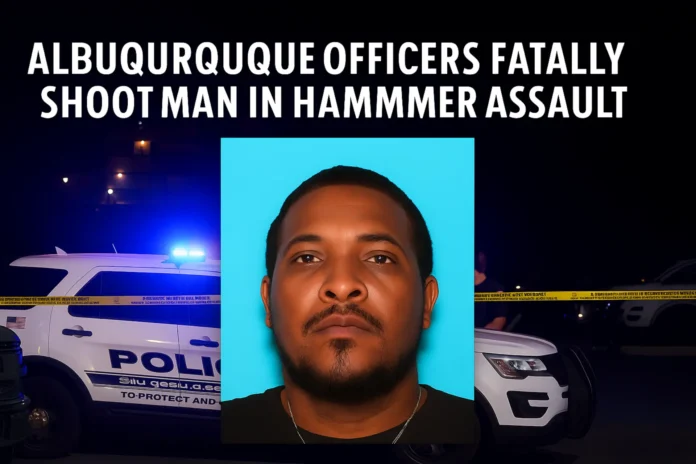
On September 29, 2025, around 3 a.m., 42-year-old Brian Womack dialed 911 from his home at 10001 Ceja Vista Road Southwest. He claimed a woman was trying to break in. Voices rose in the background, a mix of fear and anger. Officers arrived minutes later, but Womack and the woman inside refused to open the door. They left the scene to let tensions cool.
Womack called back soon after. The woman took the phone this time. She whispered they felt trapped, barricaded behind a refrigerator pushed against the entrance. Officers returned, but the door stayed shut. A third call came through, filled with shouts and curses. A supervisor on the line heard the woman cry out in pain.
That sound pulled the officers back once more. Screams echoed from behind the door. They kicked it open three times, shoving aside the fridge and furniture. There, on the floor, lay the woman, curled up as Womack swung a hammer at her head and back. One officer fired six shots in quick succession. Womack collapsed, hit in the chest, arms, and back. Paramedics tried to save him, but he died at the scene.
The woman, a friend who held a key to Womack’s place, survived with gashes to her head, a possibly broken hand, and bruises across her back. She told investigators she feared for her life that night. In the weeks before, Womack had reached out to police multiple times, voicing worries about intruders in his walls and tampering at his door. Those calls hinted at deeper struggles, though records show no prior arrests.
This marked the 13th officer-involved shooting for the Albuquerque Police Department this year, with 10 ending in death. Such numbers highlight a persistent challenge in balancing rapid response with de-escalation in a city. The involved officer, hired in 2023, described the moment as a heartbeat decision to protect an innocent life under immediate threat.
Domestic disputes like this one reveal raw fractures in everyday relationships, often tangled with unspoken mental health needs. Research points to a clear thread: up to 60 percent of people with chronic mental illness have faced physical violence from partners, doubling risks for those already battling depression. Early intervention could rewrite these endings, turning frantic calls into paths for healing rather than headlines.
For those caught in similar shadows, resources stand ready. Reach out to the National Domestic Violence Hotline for confidential guidance around the clock. Track local trends through the Albuquerque Police Department’s shooting data. And explore the mental health ties to violence via the National Institute of Mental Health.