

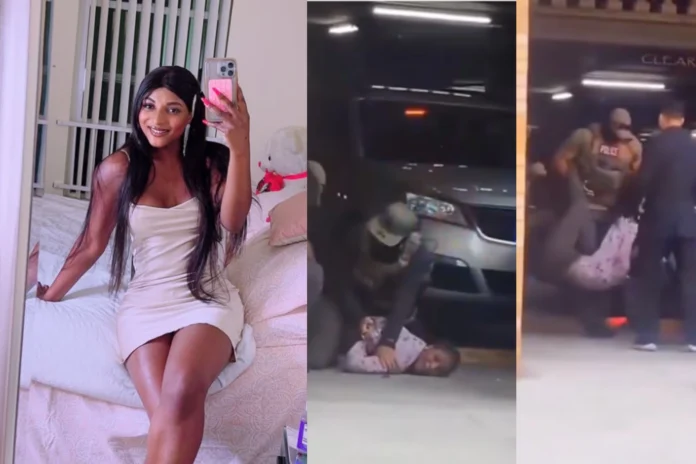
The August arrest of Colombian TikTok influencer Leidy Tatiana Mafla-Martinez, known online as Tatiana Martinez, has ignited a national debate over immigration enforcement, social media activism, and the use of force by federal agents.
The 24-year-old content creator, who amassed over 37,000 TikTok followers under the username @tatianamartinez_02, was known for livestreaming Immigration and Customs Enforcement (ICE) operations across Los Angeles. Her Spanish-language videos, often critical of immigration policies and raids, made her a prominent voice among immigrant communities navigating an increasingly tense political climate.
On August 15, 2025, Martinez was arrested outside her downtown Los Angeles apartment while livestreaming from her Tesla. Multiple videos of the incident show ICE agents surrounding her vehicle before forcibly removing her and pinning her to the ground. One agent appeared to press a knee on her head or neck as she screamed, “Wait, wait, I’ll get out!” in Spanish.
Witnesses reported that Martinez became unresponsive during the confrontation. She was later transported to White Memorial Hospital and subsequently transferred to an ICE detention center in Calexico, California.
A Department of Homeland Security spokesperson, Tricia McLaughlin, confirmed that Martinez’s arrest stemmed from a 2023 DUI conviction in Los Angeles, calling her “a criminal illegal alien from Colombia.”
Martinez gained prominence on TikTok through her Spanish-language videos that detailed ICE raids, offered guidance to undocumented communities, and criticized immigration enforcement policies. Her content often featured on-the-ground footage, including one viral clip showing the detention of a strawberry delivery driver.
Supporters describe her as a “community reporter” who used her platform to educate and empower vulnerable audiences. Her critics, however, have accused her of interfering with law enforcement operations.
Adding to the chaos of Martinez’s arrest, tow truck driver Bobby Nunez, 33, allegedly towed away one of the ICE vehicles used in the operation—while agents were still present at the scene. Federal court documents say the SUV contained government property, including a firearm secured in a lockbox.
Video circulating online shows Nunez laughing and filming as an ICE agent chased after his truck. He was later arrested on September 2, 2025, and charged with theft of government property—a felony carrying a potential 10-year federal prison sentence. Nunez pleaded not guilty on September 29, with a trial scheduled for November 18.
However, her attorney, Carlos Jurado, disputes this reasoning, claiming Martinez was targeted for her online activism. Jurado alleges that during detention, agents taunted her with questions such as, “Did you think you could record our activities without facing repercussions?” He also stated that Martinez repeatedly asked to see a warrant, but none was presented.
“Tatiana’s arrest wasn’t about a DUI—it was about silencing someone who exposed what they didn’t want the public to see,” Jurado said.
The livestreamed arrest has sparked widespread outrage. Social media users and immigrant rights advocates have condemned what they describe as excessive force and retaliation against a journalist and activist. Hashtags like #FreeTatianaMartinez and #StopICEViolence have trended on TikTok and X (formerly Twitter).
As of October 2025, Martinez remains in ICE custody in Calexico. Her attorney reported visible bruising on her body from the arrest, but said she is “mentally resilient” and determined to fight deportation.
While unverified reports online claim she has already been deported, no official documentation confirms her removal from the United States. ICE has not responded to multiple media requests regarding her current status.
Civil rights organizations, including the American Civil Liberties Union (ACLU), have expressed concern over the case, calling for transparency and an investigation into whether Martinez was targeted for her speech.
“This is about more than one influencer,” said an ACLU spokesperson. “It’s about whether documenting government activity can get you detained—or worse.”
The Martinez case has become emblematic of a broader struggle over free speech, government accountability, and immigrant rights in the social media era. It underscores tensions between law enforcement agencies seeking to enforce immigration laws and activists using digital platforms to expose them.
