

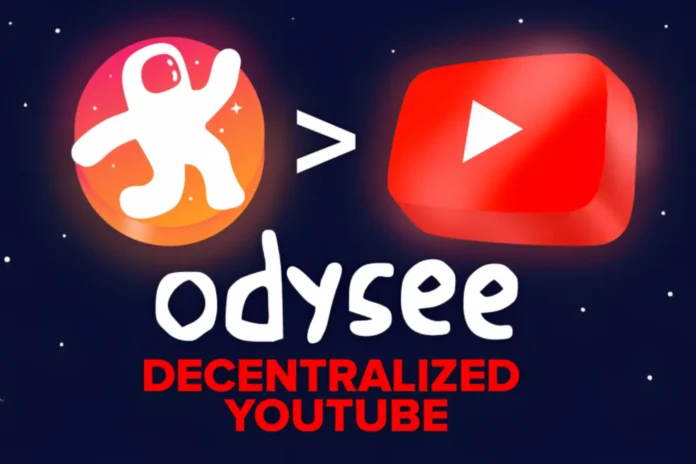
Is YouTube Really Blocking Links to Odysee? Exploring Censorship Claims & Evidence
What Is Odysee? Odysee was introduced in 2020 as the successor to LBRY and is a blockchain video platform that functions as a video-sharing platform that’s not controlled by central authorities such as YouTube. While YouTube centrally moderates 2.5 billion monthly users, Odysee focuses on fewer restrictions and enables content creators with cryptocurrency tips for monetizing content. This approach is popular with YouTube content creators who feel frustrated with YouTube’s stringent moderation, as they have more freedom in uploads and fewer removals from the platform.
A tweet from X.
Odysee has continuously grown and has an approximate 8 million users, and it has been referred to as a platform where YouTube creators banned or restricted can keep on creating content. The decentralized platform makes it hard for content removal technically, and this directly compares to YouTube’s centralized platform.
The Censorship Claim The most recent accusations came in October 2025 when the trending social media account DramaAlert shared screenshots that implied links to Odysee were being vanishing from YouTube video comments and video descriptions. The posts promptly went viral on X and on Reddit, raising claims of anti-competitve and censoring behaviors.
Odysee amplified the claims, urging users to tag @TeamYouTube, stating that the alleged removals represented
“anti-competitive behavior.”
Many creators reported similar experiences on social media, claiming that Odysee links vanished instantly after posting. Some described their links being flagged as spam, hinting at possible algorithmic suppression or shadowbanning.
YouTube Responds YouTube has not publicly confirmed that it is targeting Odysee links specifically. Instead, it references its policies designed to prevent spam and harmful content promotion. In June 2025, the platform updated its rules, expanding enforcement against “harmful” or “partially misleading” content. Critics argue that smaller platforms like Odysee are disproportionately affected, while major brands remain unaffected.
Experts point to alternative explanations YouTube routinely holds comments containing URLs for review, flags links appearing spammy, and checks domain reputations. These mechanisms could account for missing Odysee links without implying deliberate censorship. YouTube’s Help Center notes that links to domains flagged by Safe Browsing or violating external link policies can be automatically rendered non-clickable or hidden.
Controversies & Reactions The drama raises the free-speech vs. platform safety debate. Odysee advocates for a free-speech platform but has itself been accused of hosting extremist or disinformation content. Jeremy Kauffman, founder of LBRY and Odysee, framed YouTube’s accused actions as “textbook monopolistic,” charging that its dominance gives it the power to restrict competition.
Small creators object, blaming YouTube’s policies for unfairly discriminating against independent sites. Larger creators and companies’ links, meanwhile, proceed without challenge, which raises concerns about consistency and fairness in enforcement. The Center for Countering Digital Hate warns that Odysee’s family-friendly stand can fatten fringe content and raises additional concerns about moderation on the platform.
Why It Matters The stakes for decentralized platforms are high. Link suppression cures growth and referral traffic by limiting discoverability. And it highlights the difficulty new platforms have in keeping up with technology giants. The brouhaha fuels ongoing arguments over digital monopolies, fairness, and moderation versus free speech.


[…] Is YouTube Really Blocking Links to Odysee? Exploring Censorship Claims & Evidence […]
[…] Visit Source […]