

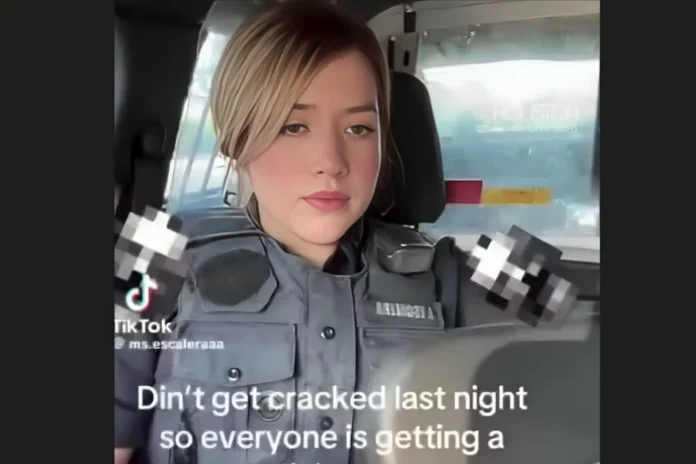
In a viral video that has caused outrage as well as an official probe, a deputy from Texas has faced backlash for giving a sexually charged joke while on uniform duty. Deputy Jennifer Escalera of Harris County Constable Precinct 5 filmed herself in her patrol car stating,
“Didn’t get cracked last night so everyone is getting a ticket.”
The term “cracked” is slang for having sex and viewers were quick to interpret her message as a threat to misuse her authority out of personal frustration.
The TikTok video, though instantly deleted, spread rapidly on X, Facebook, and on YouTube, as screenshots and screen captures of it fanned public outrage. Even though some blurring of the clip took place, Escalera wore a distinctly readable identification tag, which made identification of her easily feasible. The altercation happened on a late evening of July 2025 just outside Houston, Texas.
Escalera, when she joined the department in September 2021, had made quite a presence of herself on social media prior to this scandal. Her TikTok account had several videos of her in uniform some humorous, some of a personal nature. Many of those clips have since been removed or marked private.
Community response has been swift and divided, though criticism dominates.
“It’s really inappropriate and disrespectful,”
one local resident told FOX 26 Houston. Another, Alex Fitch, commented,
“It makes them look unprofessional… you can’t take them seriously.”
The implication that citations might be issued based on personal dissatisfaction rather than lawful conduct has alarmed many residents, raising concerns about integrity and fairness in policing.
The Harris County Constable Precinct 5 administration issued a short statement:
“Our administration is aware and internal affairs has opened an investigation. “We have no further comment at this point.”
No disciplinary action has been publicly verified as of August 5, 2025.
The scandal sheds light on one of the new challenges of modern law enforcement: the tension between freedom of expression as an individual and official mandate on social media. Police officers, as public officials, are supposed to behave well on and off duty. While some argue that wits and empathy must remain among line officers, others point out that sarcastic comments, even if spoken casually, may breach public trust when spoken from the seat of power.
Similar incidents have unfolded across the U.S. In New Mexico, Officer Aldin Hamdy faced charges for impersonating law enforcement on TikTok. These episodes trigger broader debates about allowable officers’ internet presence especially when their entries might blur the line demarking duty from private feeling.
However, public opinion harm has been done. This type of action, whether deliberate or accidental, has the ability to deprive communities of faith in the police, particularly communities that already harbor suspicions of discriminatory police work. The video, even if likely a jest, fueled fears that emotions or personal lives would influence officer behavior on the streets.
A tweet from X.
This episode also underscores a need for clearer, firmer departmental policies regarding social media. As public officers spend increasing time on digital platforms, agencies have to protect officers’ freedom of private expression against their constitutional mandate to serve public trust. Training, guidelines, and mechanisms of accountability have to keep pace with changing times.
In the end, the case of Deputy Jennifer Escalera is a reminder that humor, intent, and context can all be lost in a 10-second video but consequences may linger far longer. As the investigation continues, the public is left to weigh one officer’s moment of questionable judgment against the broader question of how we expect those in uniform to represent both the law and themselves.

