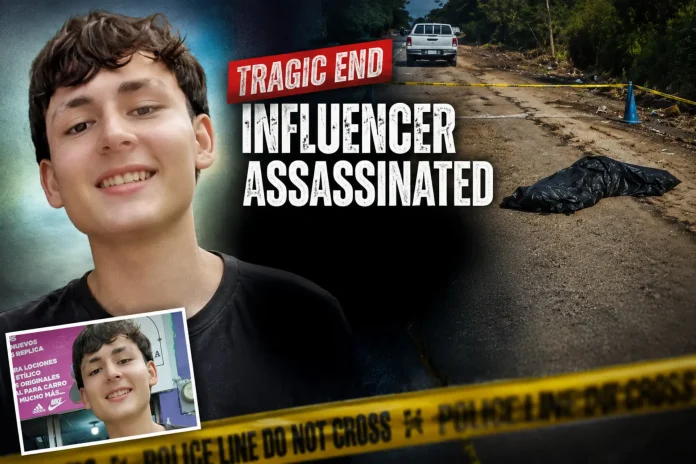
Six days after the body of 15-year-old TikTok streamer Pedro Alexander Díaz Franco was recovered from black trash bags along the CA-13 highway in northern Honduras, the country’s Dirección Policial de Investigaciones (DPI) has yet to publicly name a suspect or confirm a motive. The case, first detailed in our breaking-news coverage on July 9, has stalled without any arrests according to English-language outlets tracking the DPI’s case files, and the family of the slain teen is now publicly demanding that investigators explain what they have done since the recovery.
Honduran authorities have confirmed to local media outlets in San Pedro Sula that they have interviewed dozens of witnesses from the Campo Nevada neighborhood where Pedro was last seen alive, processed the Reyes Caballero stretch of the CA-13 where his body was discovered, and pulled CCTV footage from nearby gas stations and storefronts. None of those steps has produced a public suspect description, and officials have declined to confirm or deny whether the four-thousand-dollar ransom reportedly demanded from the teen’s mother is being treated as a verified investigative thread.
That four-thousand-dollar figure has become the most debated element of the case among investigators, regional criminologists, and the teen’s growing circle of online sympathizers. Kidnapping experts say a ransom that low in a region where transnational criminal organizations have historically demanded five- to six-figure payouts points away from a cartel-ordered kidnapping and toward what regional analysts call an “express kidnapping”, a short-duration abduction designed to extract whatever the family can scramble together within hours rather than days. The pattern is most associated with street-level extortion cells operating under the umbrella of larger criminal franchises, raising the prospect that Pedro’s killers were local operatives using established kidnap infrastructure rather than top-down cartel enforcers.
The Cortés department where Choloma sits has long been contested ground among MS-13, Barrio 18, and a growing contingent of Mexican transnational networks that have moved into northern Honduras in recent years as the cocaine corridor through the department has consolidated. Police and analysts tracking the region describe the operational reality as a franchise-style structure in which street cells collect ransom, run localized extortion, and remit a percentage upward to higher-echelon brokers. Within that model, the teen’s killing fits the read of the Mexican cartels operating across Honduras and Central America, which now generate tens of billions of dollars in annual revenue, a financial scale that funds the kind of street muscle that pulled off the abduction on July 5.
Honduras-wide extortion has climbed steeply since the country’s State of Exception was declared in December 2022, with one recent national victimization survey putting the rate at 11.6 percent of households affected by extortion in 2024, up from 9 percent in 2022. Researchers attribute the rise to the migration of Mexican cartel franchises into the northern departments and to a decentralization of street-level enforcement within local Salvadoran-style gangs. Cortés, along with Francisco Morazán and Atlántida, leads the country in extortion complaints per capita, a backdrop that has shaped how residents in Choloma and La Lima interpret each fresh wave of violence.
The Díaz Franco family has maintained its public campaign for arrests through daily social media posts, neighborhood canvassing, and at least one sit-in at the entrance to the DPI offices in San Pedro Sula, where relatives say they were told only that “lines of inquiry are open.” Community activists across Cortés have begun circulating photographs and rough descriptions of unidentified men seen in the area around the Campo Nevada soccer field on the evening of July 5, urging anyone with information to contact the DPI tip line rather than post accusations publicly on TikTok and Facebook.
The last widely circulated video before Pedro’s abduction was a collaboration with Honduran content creator Paty Burgos, who broke her public silence three days after his death with an emotional tribute, the Spanish message “Por qué te fuiste” (“Why did you leave”), as reported by the Honduran outlet Once Noticias, which has covered the Cortés department beat throughout the case. Burgos has not elaborated on her connection to Pedro beyond the brief tribute, but her post has been shared across TikTok and Instagram tens of thousands of times and is among the most-circulated public memorials to the teen.
The visibility that Pedro had built on TikTok is now being re-examined by advocates as the very factor that may have flagged him to criminal networks who increasingly scan social platforms for perceived indicators of disposable income. Earlier killings of Latin American TikTok creators, including Mexican TikToker Valeria Márquez who was fatally shot during a livestream broadcast in Zapopan, had underscored the same vulnerability but in a different national context, a parallel that investigators and digital safety advocates now point to as part of a regional pattern rather than an isolated incident.
The investigation is unfolding under the shadow of the State of Exception declared by the Castro administration in late 2022 and renewed in successive months since, which suspended certain civil liberties in parts of Honduras to allow police and military to detain suspects without warrant. Critics say the policy has done little to blunt extortion in Cortés and neighboring departments, and rights groups have documented hundreds of arbitrary detention complaints. The Díaz Franco family has joined those critics in calling for an overhaul of the investigative process and for international observers to monitor the case.
Without identifiable eyewitnesses willing to come forward, or recovered forensic evidence that conclusively ties the black trash bags to a specific kidnapping cell, investigators face what one DPI veteran described privately as a case that “risks joining the long list of Cortés murders that never receive an answer.” For Pedro’s family, the immediate demand remains a suspect, an arrest, and a public motive that explains why a fifteen-year-old with a smartphone and a soccer ball became a target in the first place.