

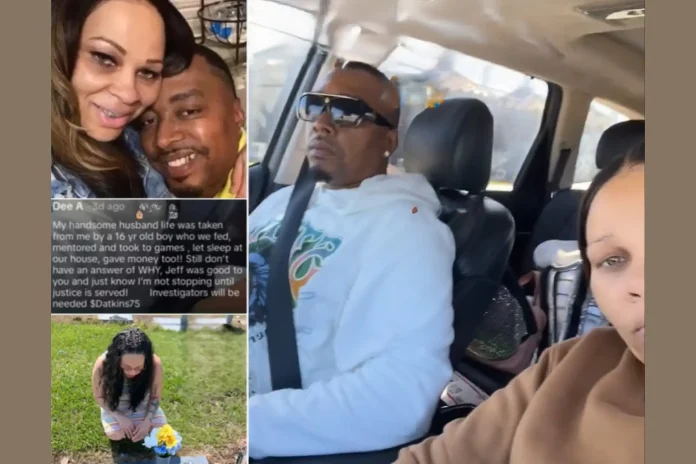
In a heartbreaking betrayal of trust, Arkansas resident Dee Atkins lost her husband Jeffrey to multiple gunshot wounds inflicted by a 16-year-old boy the couple had mentored and housed like family for years. The shooting unfolded on the evening of January 5, 2026, in their home in England, a small town in Lonoke County, where Jeffrey, 49, succumbed to internal bleeding after emergency responders allegedly mistook his injuries for an opioid overdose and administered Narcan instead of immediate trauma care. This delay, according to Atkins, may have cost precious minutes that could have saved his life, highlighting potential flaws in how first responders assess victims in areas plagued by drug issues.
The couple had opened their doors to the teenager, providing food, financial support, and guidance without any prior signs of conflict, treating him as one of their own in a community where such acts of mentorship are common but now underscore the risks involved. Atkins was out of town when she received the devastating call about the shooting, rushing back only to learn that Jeffrey had passed before her arrival, shot several times with no exit wounds that led to fatal internal damage. Authorities arrested the juvenile suspect shortly after, charging him with first-degree murder, though he has refused to explain his actions, leaving the family grappling with unanswered questions about the motive in a case that has shocked the tight-knit rural area. Lonoke County Sheriff’s Office press release details the arrest, emphasizing the swift response but omitting specifics on the emergency handling.
Atkins has shared her grief through a poignant 20-second TikTok montage that has gone viral across platforms like Instagram and X, featuring intimate photos of the couple overlaid with captions like “My baby, I wasn’t ready bae ” and set to SZA’s “Snooze,” where lyrics such as “Oh, never said it would be easy / But I can’t stop crying / Sometimes I wish I had me a genie / So I could stop time” blend with her emotional voiceover reflecting on loss. In the clip, her voice trembles with raw sorrow as she narrates, “I never asked the Lord for strength until I lost mine. I still hear your voice pushing me forward,” accompanied by the song’s mellow R&B beat that echoes a steady, heartbeat-like rhythm, evoking the enduring bond she describes amid interspersed images of happier times and subtle nods to broader issues like mishandled police responses, including clippings reminiscent of high-profile cases. This personal tribute not only humanizes the tragedy but also amplifies her call for accountability, as she plans to engage a private investigator and attorney to probe both the teen’s actions and the responders’ protocol. For more on the official investigation, see the local police report summary.
Compounding the pain, this loss marks another chapter in Atkins’ history of profound grief, following the deaths of her two sons in 2018 and 2022, which she has openly discussed as part of her resilience narrative. The incident raises broader questions about youth mentorship programs in underserved communities, where good intentions can sometimes intersect with unaddressed personal struggles in mentees, potentially leading to unforeseen violence. While the juvenile’s case proceeds under sealed court records due to his age, public records from Arkansas court registries indicate the seriousness of the charges, prompting discussions on whether systemic support for at-risk teens could prevent such outcomes.
As a journalist covering community stories, this case exemplifies how assumptions in emergency situations can exacerbate tragedies, particularly in regions with high overdose rates where protocols might prioritize drug interventions over visible trauma signs. It serves as a reminder that thorough assessments are crucial, and Atkins’ pursuit of answers could spark reforms in training for first responders. Ultimately, her story underscores the fragility of human connections, urging a balance between compassion and caution in helping others.

