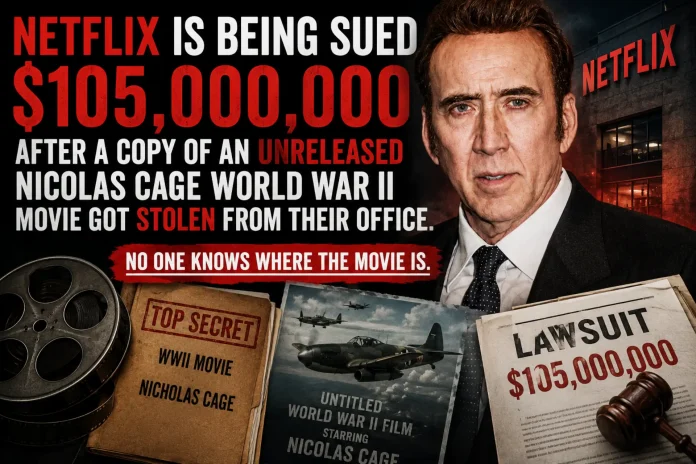
Netflix faces a $105 million lawsuit after an unencrypted master copy of the unreleased Nicolas Cage World War II film Fortitude was stolen from desks at its Los Angeles offices and remains missing to this day. Producer and financier Simon Afram, a Swiss businessman who spent years bankrolling the project, along with his company Op Fortitude Ltd filed the action in California federal court alleging conversion and breach of contract over the loss of the Digital Cinema Package that held the working cut. The film, which dramatizes real British intelligence operations to deceive Nazi forces and stars Cage as double agent Dusko Popov, never made it into official Netflix ownership, yet the security lapse has upended its path to market. No recovery has been reported, and the production team says the constant risk of an online leak has frozen sales talks with interested distributors. The suit lands alongside a wave of mass tort actions piling up against major corporations in 2026.
The events unfolded at Netflix facilities located at Sunset Bronson Studios in Hollywood, California. On June 15, 2026, an associate producer hand-delivered the physical drive containing the unencrypted package after the company had requested a screening version for evaluation. Netflix had shown interest following promotional materials received in December 2025 and specifically directed that any encryption protections stay open so internal teams could test the film. Staff received clear instructions to delete the files once the screening finished around June 16 and then notify the producers when the drive was ready for return. Instead, silence stretched for days until June 25, when executive Sean Berney emailed that someone had stolen a good amount of drives from office desks during the preceding week.
Security teams at Netflix investigated without success, and the company placed its piracy monitors on high alert while offering to reimburse the cost of the drive or create a replacement package. The producers filed their own police report, yet Netflix declined to involve the Los Angeles Police Department further or share full details of its internal probe. Physical hard drives carrying film masters typically lack continuous GPS-style tracking or remote wipe capabilities once they leave a controlled vault. Standard industry practice relies on encrypted Digital Cinema Packages that require a separate Key Delivery Message to unlock playback, limiting access even if the drive itself is taken. Companies also prefer secure digital links protected by passwords or in-person screenings inside locked facilities rather than leaving open packages sitting on open office desks.
Afram spent seven years and more than $45 million of his own funds to write, produce, and finance the project, directed by Simon West. The complaint argues that exclusivity formed a core part of the film’s value and that loss of control over the master destroyed that advantage for any buyer. Prospective partners would now face the prospect of the picture appearing free online at any moment, which could undercut marketing spends, insurance, and awards positioning built on record-breaking film performances. Netflix has responded that the package arrived without industry-standard safeguards and that the company bears no risk of loss under those conditions, while still conducting its own investigation and offering to watch piracy sites. Berney’s note suggested the drives might simply be sold for scrap, yet the producers counter that the absence of encryption left the content fully accessible.
This episode exposes persistent gaps in how even major platforms handle physical media during acquisition talks. Hollywood has long relied on encrypted packages and key delivery systems precisely to prevent the scenario now unfolding, yet the request to open those protections for convenience created the vulnerability. The irony is hard to miss, given that Fortitude itself dramatizes elaborate deception operations that once turned the tide of a global conflict. The film’s wartime backdrop echoes other WWII-era industrial side stories that reshaped global commerce.
For independent financiers like Afram who sink personal capital into passion projects, the incident serves as a costly reminder that trust in a partner’s internal security can evaporate overnight and leave years of work in limbo. The full court complaint details the timeline, delivery instructions, and damages theory. Industry coverage of the production appears in this Hollywood Reporter report. Earlier casting announcements confirm principal photography began in London under West’s direction as reported in this trade update. Until the drive surfaces or the case reaches resolution, the finished picture remains sidelined and its commercial future uncertain.