Streaming has officially fulfilled the promise industry analysts made nearly a decade ago — but not in the way many expected artists to benefit.
In 2017, analysts predicted that streaming would become the dominant force in music consumption within a decade. By 2025, that forecast has largely come true: streaming now accounts for roughly 69% of global recorded music revenue and 84% in the U.S., according to industry data. Paid subscriptions have climbed past 105 million domestically, surpassing even the most optimistic projections from the mid-2010s.
Hip-hop’s rise has mirrored that transformation. The genre, which overtook rock as the most-consumed style of music in the U.S. in 2017, now represents about 31% of total on-demand streams — the largest share of any genre.
But while streaming dominates the industry’s revenue mix, it has become a secondary income stream for successful rappers themselves. Instead, artists are increasingly using streaming as a discovery engine that fuels higher-margin businesses like touring, merchandise and brand partnerships.
Back in 2017, global streaming revenue stood at $7.4 billion, representing 43% of recorded music income and growing nearly 40% year over year. Analysts widely assumed that as streaming scaled, artist payouts would improve alongside it.
That hasn’t happened. By 2024–25, global streaming revenue had surpassed $20 billion, but per-stream payouts have declined by an estimated 20% since 2017. On major platforms, artists earn roughly $0.003 to $0.005 per stream — figures that require billions of plays annually to generate significant income.
Even at the top end, streaming represents only part of the picture. Drake, Spotify’s most-streamed male artist with more than 82 billion lifetime streams, has generated an estimated $331 million from streaming — substantial, but far from his primary revenue source.
Rather than cannibalizing live music, streaming has amplified it. As on-demand platforms expanded access and discovery, they helped artists build global fan bases willing to pay premium prices for concerts.
Live performances now account for an estimated 40–45% of revenue for top rappers, compared with roughly 15–20% from streaming. Rap’s share of the top 100 touring grosses nearly doubled from 2023 to 2024, signaling a broader industry shift toward hip-hop as a premium live draw.
Travis Scott grossed $168.1 million from 69 shows in 2024, averaging more than $2.4 million per night. Drake’s It’s All a Blur tour brought in $320.5 million across 80 shows in 2024–25. Even mid-tier acts have benefited: Rod Wave earned $28.7 million from just 19 performances.
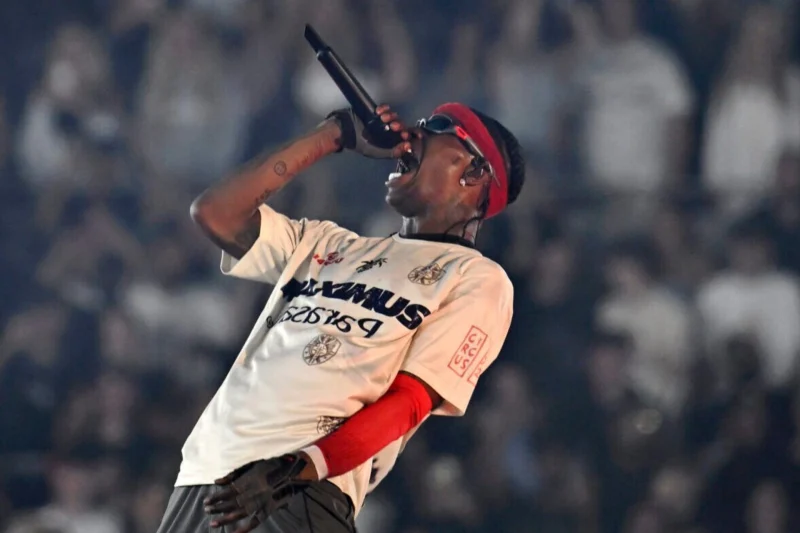
By 2025, livestreaming has emerged as a dominant tool in rap, driven in part by declining traditional music sales, rising touring costs and the growing value of direct-to-fan engagement. Industry outlets including Rolling Stone have noted that platforms like Twitch and Kick now play a significant role in breaking songs, with live collaborations and viral moments often translating directly into streaming success.
Beyond exposure, livestreaming has also become a meaningful revenue stream. Artists can earn through subscriptions, donations, advertising and brand partnerships, while newer platforms such as Kick offer more favorable revenue splits than legacy services. The format also allows artists to preview unreleased music and build momentum instantly with their audiences.
Several high-profile examples have helped define the trend. Producer and streamer Plaqueboymax has hosted live “In The Booth” sessions featuring rappers collaborating on stream, leading to viral records such as DDG’s “Pink Dreads.” Major stars including Drake have appeared on popular streams to tease new music, while artists like DDG, NLE Choppa, Soulja Boy and Logic — who signed a seven-figure Twitch deal earlier in his career — have increasingly blended music releases with full-time content creation.
The images in the viral collage reflect that shift. Lil Yachty, who has maintained a Twitch presence since the late 2010s, continues to appear on major streams like Kai Cenat’s, while Ice Spice launched her own Twitch channel in 2025 and has used the platform for high-profile appearances and fan interaction. Meek Mill and other artists have also joined the space, using livestreams for music previews, conversations and lifestyle content.
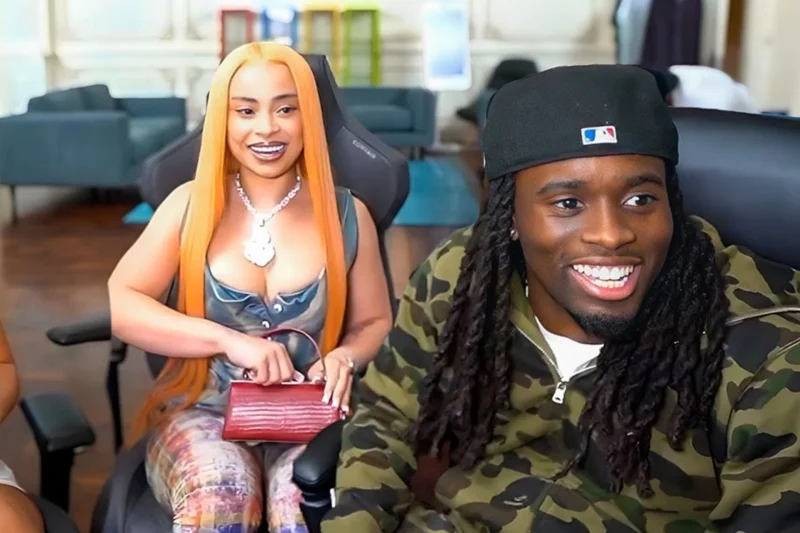
Replies to the post also highlighted early adopters who helped lay the groundwork. Fans credited Tee Grizzley, who has streamed consistently since 2020, and Soulja Boy, one of the earliest rappers to experiment with livestreaming in the mid-2010s. Others debated whether the trend truly includes every major artist, pointing out notable exceptions.
Still, the viral moment underscores a broader industry reality. In 2025, livestreaming has become deeply embedded in hip-hop’s ecosystem — not just as a promotional tool, but as a place where music is created, monetized and discovered in real time. The resurfaced tweet’s accuracy has turned it into a cultural flashpoint, capturing how quickly the genre’s business model continues to evolve.