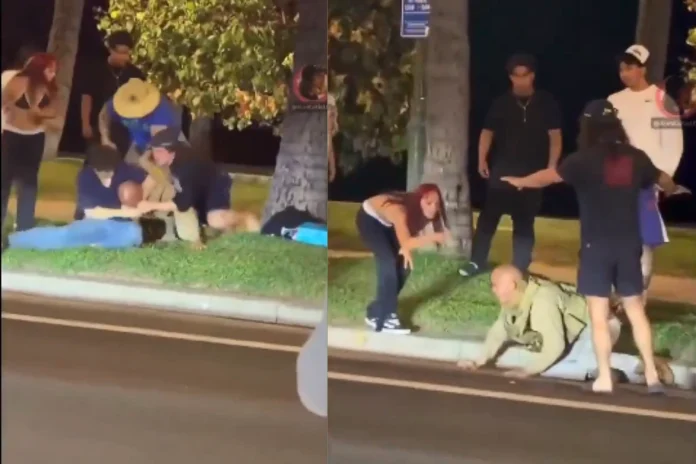
A chaotic 55-second cellphone video that exploded across social media showing a group of people dragging a man in tactical “ICE” gear to the ground and beating him has been corrected by federal officials: the victim was not a U.S. Immigration and Customs Enforcement agent, but a local impersonator.
The raw footage captures the nighttime altercation on a Waikiki sidewalk around 8:12 p.m. on Saturday, March 28. In the clip, bystanders shout as someone throws liquid at the man before multiple individuals pull him down and repeatedly punch and kick him in the head and body. He appears to lose consciousness at one point before stumbling away bloodied and dazed. The video racked up millions of views in hours.
The original post framed the incident as “US citizens in Hawaii beating up an ICE agent for trying to arrest them illegally.” That narrative spread rapidly amid tensions from the “No Kings” protests — locally called “No Dictators” out of respect for Hawaiian history — against the Trump administration’s immigration policies. The main rally had taken place earlier that day in downtown Honolulu, but spillover confrontations reached the tourist-heavy Waikiki area.
The Department of Homeland Security quickly pushed back with a clear statement. “This person is NOT an ICE agent and is not connected to DHS in any way,” officials said. They identified the man as a 52-year-old Waikiki-area resident known for dressing in similar tactical gear and repeatedly confronting crowds, protesters and bystanders in the neighborhood — essentially trolling amid the heated immigration debate.
Honolulu Police Department officers responded to the scene. A 15-year-old boy was arrested later that evening and charged with second-degree assault, with authorities continuing to investigate possible additional suspects. The impersonator received medical attention from EMS but was able to walk away under his own power. Federal officials noted they may pursue separate charges against him for impersonating a federal officer, a crime DHS warned “endangers public safety and erodes trust in law enforcement.”
The incident has fueled polarized online debate. Some commenters celebrated it as classic “Hawaii don’t play” resistance, while others condemned the group assault as unjustified vigilante violence — stressing that beating someone on the ground, even a provocateur, crosses the line.
This case also spotlights the broader risks of law enforcement impersonation, which has spiked during periods of intense immigration enforcement. Real ICE operations involve coordinated teams and protocols, not solo individuals in tourist spots. The viral video, while genuine in its depiction of street violence, was not the federal arrest confrontation many initially believed.