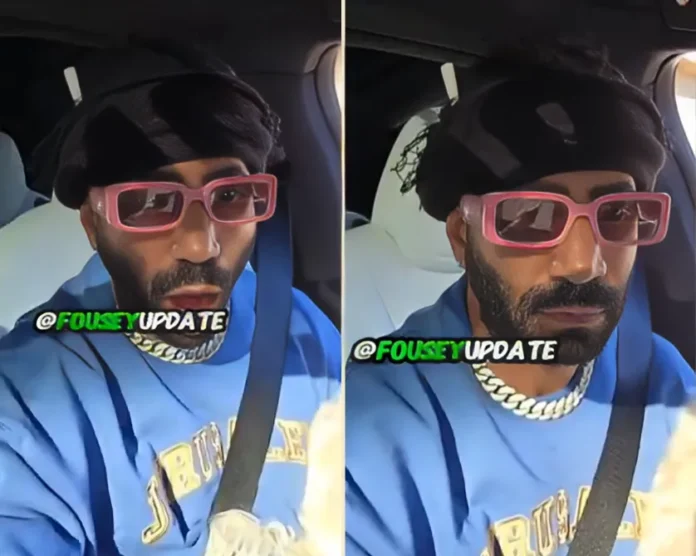
Kick streamer Yousef “Fousey” has landed himself in the middle of a tech-policy tempest after Tesla temporarily banned him from the carmaker’s Autopilot feature. That suspension came after Fousey had been caught violating Tesla safety protocols while driving and streaming to an online audience.
The suspension lasts for seven days, which aligns with Tesla’s recent policy updates regarding monitoring driver attention while using Autopilot. This policy allows for suspension if the system detects insufficient driver engagement.
Fousey was driving while live-streaming, a popular activity among social media personalities. However, Tesla’s automated system flagged his behavior for insufficient engagement with the steering wheel-a basic requirement for utilizing Autopilot. During his stream, a notification showed up on his car’s dashboard to inform him of the suspension:
”You are being suspended based on your driving.”
The suspension is connected to Tesla’s updated policy of punishing drivers who don’t meet the safety criteria set by the company. This update includes monitoring drivers’ engagement through steering wheel torque and cabin cameras, which track head and eye movement for signs of attentiveness.
Tesla’s Autopilot is an advanced driver-assist system, not an autonomous driving system. It requires drivers to keep their hands on the wheel and to remain attentive at all times so they can assume control if necessary. Late last year, Tesla introduced a “strike” system to reinforce this requirement. A driver who gets five strikes for inattentiveness or improper usage under Autorrive faces a one-week suspension from the usage of Autopilot.
Fousey’s livestreaming session reportedly violated the aforementioned etiquettes. While the nature of the violations on his part is not clearly spelled out, it is apparent that the system detected an absence of decorum.
This suspension is an effort by Tesla to enforce strict safety measures on the users of Autopilot. The move has been very well debated online, with discussions ranging from everyone to fans and Tesla owners to safety advocates.
Reactions have been mixed on social media and Tesla owners’ forums. Many Tesla owners praised the move, citing the need to follow safety guidelines. “The system’s there to save lives, not to be a toy,” said one Twitter user.
Some owners of Teslas have complained about false alerts and the sensitivity of the system. One frustrated owner in a Reddit thread went as far as to say, “I’ve had strikes for looking at my side mirror. It’s too harsh!”.
The Fousey fans become polarized: some came to his defense, suggesting that the live stream impeded his driving not a bit, while others just felt that to stream and drive, even with Autopilot, was irresponsible.
Tesla’s move underlines the never-ending battle between advanced technology and user autonomy. The Tesla updated rules are part of a broader push to make features like Autopilot and Full Self-Driving beta safer. While these features had intent to make driving safer and more convenient, they also had strict compliance requirements in order to avoid misuse.
Fousey’s case epitomizes enforcement of the rules. Add live streaming to that, and it begs many questions about the delicate balance between sharing a real-time experience and sharing up and down the road. Tesla’s system doesn’t differentiate between casual distraction and a person showcasing the capability of the car to thousands of viewers online.
For the foreseeable future, Fousey will do some real, hands-on driving-no assistance from Autopilot. We shall see if he ever does live streaming while driving again, but clearly, an important conversation about safety and responsibility on the road has been opened.
The way Tesla hands down such policies continues to evolve with the challenges of introducing advanced technology into everyday life. For fans, the suspension of Fousey might have caused a hiccup in his high-octane channel content, but it served as a reminder that even influencers had to follow the rules regarding safety.