

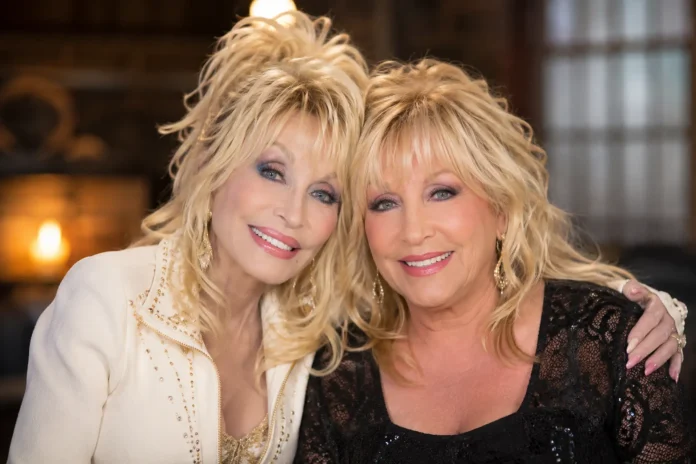
Stella Mae Parton said her older sister Dolly Rebecca Parton told her near the end that if doctors ran out of options, they could still try experimental drugs on her in case the work helped someone else later. “She told me recently that if there was no hope for her, she would still allow her medical team to try experimental drugs in the hope of helping others in the future,” Stella wrote, in a tribute posted Thursday across her Facebook and Instagram pages and reproduced by the Hollywood Reporter.
The country singer, 77, was one of the most visible mourners to surface in the days after Dolly’s death. The Associated Press reported that Dolly died Tuesday, Aug. 25, at Vanderbilt-Ingram Cancer Center in Nashville at age 80 after what her publicist, Marcel Pariseau, called a brief battle with cancer. Representatives have not named the type. Stella’s account surfaced two days later, on Aug. 27, and she framed it inside the same way Dolly had lived for decades: as a donor rather than a recipient of medical research.
“What the world saw is exactly who she was,” Stella wrote. “My sister was one of the most generous, thoughtful and kind people I’ve ever known, so much so, she told me recently that if there was no hope for her, she would still allow her medical team to try experimental drugs in the hope of helping others in the future.” She asked fans who wanted to honor that life to show more kindness and give more of their time, an ask that sits in the long lineage of family tributes delivered on the day of an unexpected death. Variety and USA Today ran Stella’s full quote through Wednesday and Thursday.
The offer Stella described fits a public record of gifts that had already reached medicine years earlier. In 2020, Parton donated $1 million to Vanderbilt University Medical Center, the same hospital network where she died, for COVID-19 research that fed work on the Moderna vaccine. Her Imagination Library has sent more than 300 million books to children in five countries since 1995. Both gestures sit on the same ledger Stella was describing: a willingness to attach her name, her money, or her body to someone else’s future outcome. The Tennessean reported that Dolly Parton spent her final days under care from nurses and physicians at the Vanderbilt-Ingram Cancer Center.
Parton was admitted Friday, Aug. 21. Family members said she was surrounded by loved ones when she died. Her nephew Bryan Seaver, the son of sister Cassie Parton and her head of security for more than two decades, announced the death in a video she had asked him years earlier to record when the time came. The announcement carried the same plain-spoken register Dolly had used in her own public statements. “It is an honor, an honor that is mixed with absolute pride and great sadness,” Seaver said. “Sadness lies with us, not with Dolly.”
Stella’s post opened on the Tuesday ritual the sisters kept for years. Before sunrise they drank coffee on the phone, traded gossip, and made plans. Dolly used to tell her, “Shoot Tedda, we get more work done before the sun comes up than most folks do all day long.” Stella said that hour will never be the same. “My big sister Dolly got her wings this past Tuesday,” she wrote. “If anyone gets to heaven I’m sure she made it right on time. I know she’s showing out big time, in all her sparkles and shine. That was my sister’s way.” The phrase echoes the Nashville country-music world’s long-running shorthand for the rhinestones-and-sparkle image Dolly built across six decades on stage.
Health trouble had already pulled her off the road. She postponed, then canceled, a Las Vegas residency after kidney stones and what she described as immune and digestive systems that “got all out of whack.” In a statement days before she died, she said she had neglected her own care while watching over her husband, Carl Thomas Dean, who died March 3, 2025, at 82 after nearly 60 years of marriage. The week before her hospitalization she had appeared on video from Dollywood to introduce the park’s new Nightflight Expedition roller coaster; she had been unable to attend in person because of dizziness and dehydration. The week of her death followed the same pattern that has played out across celebrity-obituary news this year: an unexpected hospitalization, a family announcement, and a public that did not know how sick she had been until it was over.
Stella Parton was born May 4, 1949, in Sevierville, Tennessee, the sixth of 12 children of Robert Lee Parton Sr. and Avie Lee Owens Parton. Dolly, born Jan. 19, 1946, in Pittman Center, was three years older. Stella charted on her own in the 1970s, most visibly with “I Want to Hold You in My Dreams Tonight,” and later wrote the memoir “Tell It Sister, Tell It.” Six of the 12 siblings are now gone: Larry, who died as an infant, brothers David Wilburn, Floyd, and Randy, brother Coy Denver in July 2026, alongside other losses that defined the year’s celebrity-obituary cycle, and Dolly herself. Surviving siblings include Willadeene, Bobby Lee (Robert Lee Jr.), Stella, Cassie, Freida, and Rachel Ann Parton George, per the Parton family’s public statements and Dolly’s official website.
Reports say Parton will be buried privately at Woodlawn Memorial Park in Nashville, in a mausoleum next to Dean. Billboard’s obituary confirmed the burial plan. Nothing in the public record confirms that experimental drugs were actually given. Stella described a conversation and a willingness, not a completed trial. That is the same line the family has held on Dolly’s medical details since the announcement: the family is sharing what Dolly chose to share, and what she chose to share was the offer, not the outcome.
She closed by thanking strangers for the love reaching the people who loved Dolly first. “She left the world a better place by being in it so let’s follow her example.” Dolly Parton’s death joins a long 2026 list of celebrity losses that has reshaped the entertainment landscape in real time, with tributes from country peers and a generational roll-call of pop and country artists who name her as foundational. What is left for those who loved her is not the medical outcome, which remains private, but the version of her that Stella captured in the post, a pattern now familiar across 2026’s long celebrity-obituary cycle: a sister who would let her body be studied if it might help a stranger, and who used her Tuesday coffee calls to make sure her younger sister remembered she was still the same person who grew up running barefoot in the Smoky Mountains.

