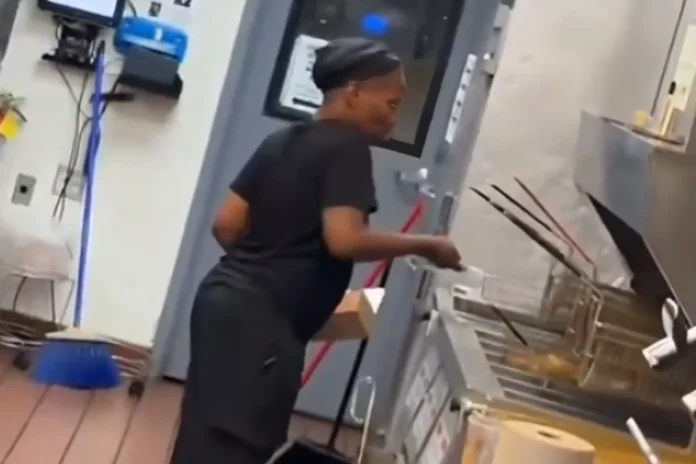
Customers were seen leaping across the counter of a busy McDonald’s kitchen, rummaging through fryers and assembling burgers while a store manager lay slumped and unresponsive nearby. Onlookers could be heard laughing amidst the chaos; one laughed,
“Everybody just getting their free meals in, man,”
as no calls for help were made during the ordeal.
A tweet from X.
The incident occurred in August 2025 at the McDonald’s store located at 4006 Lindell Blvd in St. Louis, Missouri. Video footage, which has gained over 450,000 views across social media platforms, captures the manager’s slow collapse likely due to a diabetic episode amidst severe understaffing. Only one other employee was present, leaving the restaurant vulnerable.
The clip begins with customers already behind the counter, one handling fries as the narrator notes,
“Got the customers in here making their own food, man.”
As the manager appears disoriented, leaning over a counter, the commentary shifts:
“Manager over here is sleep standing up and shit.”
The footage escalates when she fully collapses, head resting on the surface, with bystanders continuing to prioritize meals.
“Look it, she over here drooling,”
The narrator says, expressing frustration:
“Come on baby girl. You the manager, man. You supposed do better than this.”
The video ends with remarks on the lack of aid:
“Teamwork make the dream work. She don’t worker neither. I know that’s right!”
before the filmer leaves, stating,
“I’m out this motherfucker too.”
Sample search queries for verification include
“McDonald’s Lindell Blvd manager fentanyl claim fact-check” and “St. Louis McDonald’s diabetic collapse video verified.”
Digital reporters must cross-check viral content through video metadata, emergency service logs, and official statements from McDonald’s to avoid amplifying falsehoods. Without such steps, misinformation spreads rapidly, as seen here where initialdrug rumors overshadowed health and safety concerns.
The situation points to many chronic problems of the fast-food industry-characterized by long shifts, low wages, and minimal support for workers. If understaffing heightens exhaustion, medical emergencies are more likely to occur. Larger social trends demonstrate a total decline in empathy. Passersby preferred to act selfishly filming and going for food rather than helping. Public outrage in comments points to dismay at such desensitization, calling for better protection for employees and training in emergency situations.
The St. Louis case bears a resemblance to a 2013 incident that happened at a Wichita, Kansas, Taco Bell drive-through, in which Danielle Zimmerman, who was driving, suffered from a fatal brain aneurysm. Instead of aid, passersby robbed her, making off with her wedding ring and purse. In both cases, what happened displayed a very disturbing trend: crises met with opportunism and not compassion, raising questions regarding public responsibility in the field of service.
As the video continues to go viral, McDonald’s reminds us of how social media plays this duel role exposing injustices while fueling unverified narratives. It is now time that our society prioritizes factual reporting and humane responses to prevent such lapses. McDonald’s has not issued a comprehensive statement on this incident, but such an incident does provoke reforms in workplace conditions and public awareness for the restoration of lost trust and empathy.