

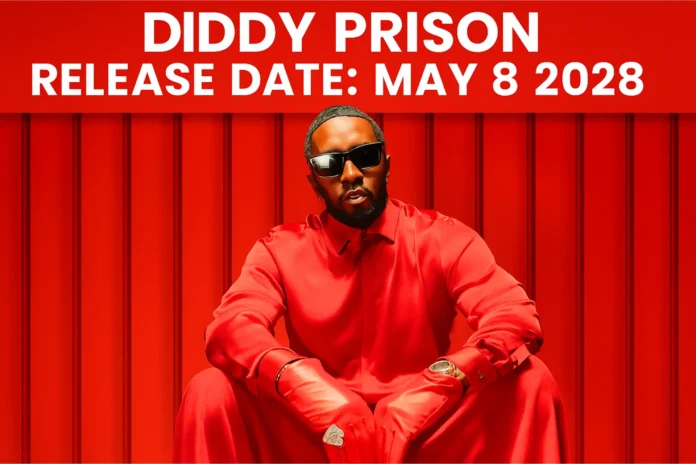
When the beats stop and the lights dim, Sean Combs might not taste freedom until the spring of 2028.
Records from the Bureau of Prisons list Diddy’s current release date as May 8, 2028. This projection emerges from a meticulous review of inmate files, factoring in the 50-month sentence imposed last month for convictions tied to transporting individuals across state lines for prostitution. Our investigation traces the threads of this timeline back to Combs’ arrest on September 16, 2024, in New York City—a moment that shattered the Bad Boy founder’s untouchable aura. With over a year already credited from pretrial detention at the Metropolitan Detention Center in Brooklyn, the remaining stretch clocks in at roughly three years and seven months.
“Such dates are just estimates, reflecting the ‘inmate’s projected release date based on BOP calculations.'”
— Federal Bureau of Prisons guideline, as detailed in sentencing analyses
Federal rules give inmates like Combs a chance to shave time off through good behavior. Under the law outlined in 18 U.S.C. Section 3624, he could earn up to 54 days off each year served. That perk, boosted by the First Step Act of 2018, might cut his effective time by around seven months if he stays out of trouble, potentially ushering in freedom by October 2027—provided no disciplinary shadows cross his path. Picture a release closer to late 2027, though any slip ups could lock in the full stretch. Prison officials calculate these breaks carefully, starting from day one of the sentence.
Yet, as our probe uncovers, these calculations are no mere arithmetic; they hinge on Bureau of Prisons discretion, influenced by factors like program participation or facility transfers. Sources close to the case whisper of Combs’ denied request for a low-security spot in New Jersey, nearer to family, highlighting the BOP’s rigid calculus on security and proximity.
“The BOP has the discretion to deny early release to any inmate whose conviction involves some element of violence and weapons possession.”
— Criminal justice expert Douglas Paperny, commenting on Combs’ eligibility
Beyond the bars, Combs grapples with a wave of civil claims that show no signs of slowing. More than 50 lawsuits pile up, painting a picture of alleged abuse and coercion over decades, from former partners to industry insiders. Investigative filings, including a poignant claim from a Michigan man recounting 2006 incidents, unearthing allegations of abuse spanning decades—from coerced encounters to systemic silencing—amplify demands for structural reform in an industry long shadowed by power imbalances. These cases, many filed under expanded survivor laws, seek accountability in ways the criminal verdict only touched, leveraging survivor-friendly statutes, transcend the criminal courtroom, pressing for reparations that echo into cultural corridors. Victims and their advocates push for settlements that go beyond money, aiming to reshape how power plays out in music.
This chapter forces a hard look at legacies built on rhythm and influence. Diddy shaped hip hop’s sound and swagger, launching stars and filling arenas, yet these headlines remind us that influence unchecked can echo painfully. This saga compels scrutiny of icons forged in sound and spectacle. Combs orchestrated hip-hop’s golden era, birthing empires from Bronx beats, yet unchecked dominion has left scars that litigation now lays bare. The music world watches closely, wondering if his return could spark redemption or just more division. As appeals loom in the Second Circuit, the entertainment sphere braces: Will 2028 herald atonement or amplified discord?
For now, the calendar holds the beat, with appeals pending and public trust hanging in the balance. As one who has covered the industry’s highs and lows, I see this not just as a personal fall, but a pivot point for how we hold icons to account, ensuring stories like these lead to real change rather than fleeting scandal, transforming whispers of scandal into blueprints for equity.
For further reading on federal credit systems, explore the Bureau of Prisons’ First Step Act overview. Track evolving civil fronts via comprehensive accuser timelines, and revisit trial contours at the case chronicle. Check the latest on his ongoing legal battles through this roundup of accusers and suits, or dive into the federal trial details at the case overview. For a deeper read on time cutting incentives, the Bureau of Prisons explains good conduct credits here.

