

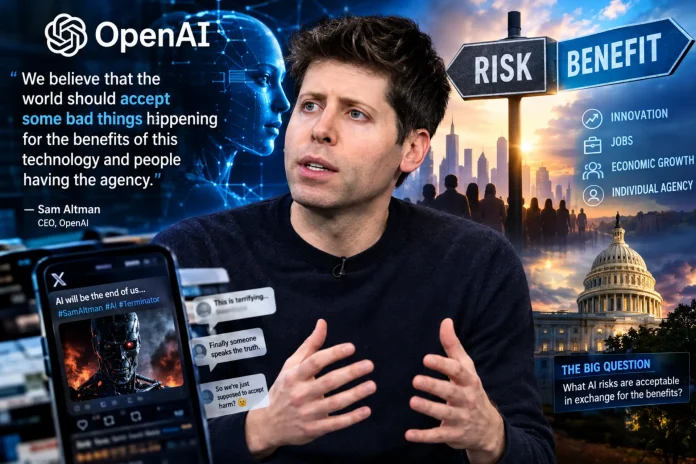
OpenAI CEO Sam Altman just drew a hard line in the sand on artificial intelligence risks and it is already lighting up social media.
In an exclusive interview with POLITICO’s Decoded newsletter published October 4, 2026, Altman said society should tolerate certain harms from AI to unlock its upside and keep the technology in regular people’s hands.
“We believe that the world should accept some bad things happening for the benefits of this technology and people having the agency,”
Altman told senior tech reporter Brendan Bordelon.
He was explaining the gap between OpenAI and rival Anthropic, led by CEO Dario Amodei. Altman said there is “a lot of daylight” between the two companies’ views on regulation. He rejects the idea that one San Francisco lab should tightly control powerful AI, block every bad outcome, and decide how to hand out the benefits. That setup, he argued, is “a completely unacceptable trade-off” that clashes with OpenAI’s preference for a lighter-touch approach.
Altman was clear about what he would not promise.
“I wouldn’t take a trade of saying, ‘We’ll make sure there’s no major hacks, there’s no misuse of this technology, there’s zero scams, there’s zero all the other bad things that will happen,’” he said. “Because I think people will do tremendously orders of magnitude more good stuff than bad stuff.”
The quote spread fast. Posts paired it with dramatic Terminator-style images that are pure editorial flair, not evidence of any real event. That framing can make the comments sound broader than they were.
The words are real. Reuters, Forbes, The Verge and other outlets independently reported the same statements from the POLITICO interview.
What often gets left out is Altman’s hard limit. He said he does not accept “really catastrophic risks,” including a serious loss of human control over AI. He has also backed some of Amodei’s recent calls to slow the most advanced “frontier” models and supported outside safety evaluations.
Altman’s stance lands in the middle of a familiar U.S. argument: how much risk is worth the innovation, jobs and economic upside? Critics point to real harms already showing up scams, hacking incidents, job shifts, privacy hits and questions about who pays when things go wrong. They worry lighter rules could let big tech set the terms and leave everyday people carrying the costs.
Supporters counter that locking advanced AI behind tight central control could slow progress and concentrate power even more. Perfect safety is impossible without giving up most of the upside and individual agency, they argue.
The core question remains open. Technology companies will keep pushing their preferred trade-offs. Regulators and lawmakers will debate the rules. Ultimately, the public will decide through elections, market choices and everyday use which AI risks are truly acceptable in exchange for the benefits.

