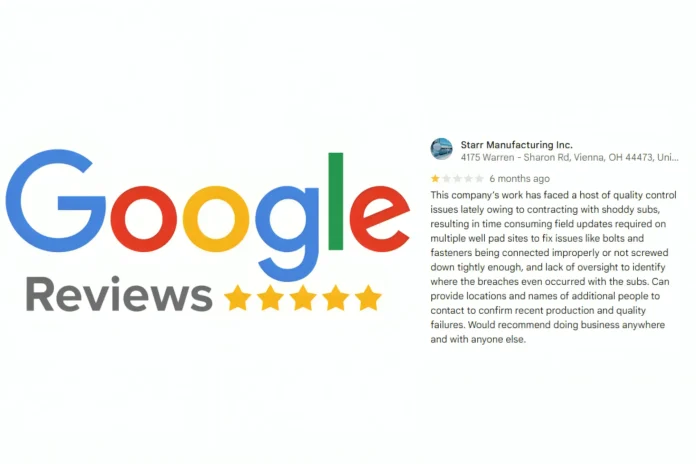
An Ohio company is seeking more than $25,000 from a woman after she posted a one-star Google review. Starr Manufacturing Inc. is not suing Julie Watson simply because she gave the company one star. The dispute centers on specific factual allegations in her March 2026 review about alleged quality-control and manufacturing failures.
Starr Manufacturing Company, which is an Ohio-based privately owned industrial machinery company that manufactures oil and gas production equipment, filed the case for defamation against Julie Watson, who resides in Columbus, on August 12, 2026. According to the claim made by the company, Watson posted reviews about the company that included accusations against the company concerning issues regarding its subcontractors, improperly tightened bolts and fasteners, repairs at various well pad sites, and lack of supervision. She also claimed that she could provide the locations and people to verify the same and advised to do business elsewhere.
Starr alleges those statements are false, were made knowingly and maliciously, and caused significant reputational harm plus other damages. The company is pursuing three claims: defamation, defamation per se, and defamation by implication. It seeks damages exceeding $25,000 (exact amount to be determined at trial), attorney fees, litigation costs, a jury trial, and a court order stopping further similar statements.
The major twist comes from Starr’s attorney, Thomas Nader. He told PEOPLE that Watson
“is not a customer of Starr Manufacturing and has never been a customer of Starr Manufacturing.”
Nader said the review stemmed from a personal relationship between Watson and a company employee that ended, calling it
“a personal vendetta.”
“This is not about Starr Manufacturing being upset about a bad review from a customer,”
he said.
“This is a personal vendetta.”
These statements remain the company’s allegations. A court has not ruled that the review was false or defamatory. Watson’s customer status, the alleged personal motive, the truth of the claims, and any actual damages are all disputed issues still to be resolved. Watson has not publicly commented; reporters have been unable to reach her. At the time of the reports, Starr had about 13 Google reviews averaging around 3.7 stars. Watson’s other reviews over roughly seven years were nearly all five stars.
This case is embedded within a wider American controversy. The negative reviews posted on Google that merely constitute an opinion are considered free speech. Any specific statements relating to product defects, manufacture flaws, or the experience of the customers may qualify for defamation if found to be malicious. Corporations claim that it is necessary for them to have mechanisms to counter the spread of malicious rumors, particularly in their industry.
The case remains pending with no reported ruling or settlement. What happens next could matter to millions of Americans who leave reviews online. Courts will examine evidence on customer status, the accuracy of the claims, and actual harm. For now, the lawsuit itself stands as a clear reminder: one star is free speech, but detailed accusations can land you in court.