

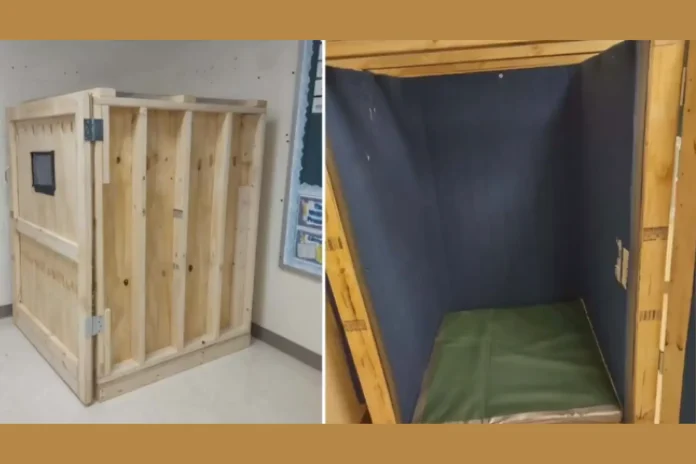
Photos of this rough wooden box, about the size of a kid, started popping up on Facebook around mid-December and just blew up online. Parents were furious, calling it straight-up “sick” punishment. By Christmas Eve 2025, the whole thing had sparked investigations from tribal police, the New York State Education Department, and even the Salmon River Central School District. Governor Kathy Hochul jumped in, saying the claims were “alarming and totally unacceptable.”
NEW: Investigation launched after a wooden box was found in the corner of a New York elementary school classroom, allegedly used to lock special needs…
It all kicked off when Chrissy Jacobs, a local mom and ex-school board member, posted the pics on Facebook on December 15 or so. She blasted the school leaders, especially Principal Alison Benedict, for messing with special needs kids.
“They built this ‘box’ for special needs students. This is messed up! … These kids shouldn’t be getting traumatized while you’re getting paid to teach and keep them safe!”
She wrote. The post spread like wildfire to X, where folks like Collin Rugg shared it with clips from a NY1 report, calling the thing a basic wooden crate with padding inside and scratch marks. Comments poured in some people wanted the school torn down, others argued it could be a sensory tool if kids agreed to it, showing how split the community is.
The Salmon River Central School District runs the K-5 school in Akwesasne, New York, mostly for Native American kids from the St. Regis Mohawk Tribe. They admitted there were at least three of these boxes in their schools and said state officials had them taken out. In the fallout, they put Principal Alison Benedict, Special Ed Director Allen Gravell, and teacher Karrie Haverstock on leave, and reassigned Superintendent Dr. Stanley Harper to work from home starting December 19. The school went remote for a couple days, December 18 and 19, to let the investigations happen. St. Regis Mohawk Tribal Police started looking into it on December 16, and the Tribal Council called the boxes “inhumane” and a sign of serious mismanagement.
Parents say these boxes were used to shut kids away, including non-verbal autistic ones, without asking anyone. At least four families have come forward, saying their children knew exactly what it was. One grandma told how her 8-year-old grandson got stuck in there for acting out. But district folks claim it was just a “calming tool” for behavior, not punishment, and at first said no kids ever went in it then backtracked to say it was used a bit for a few weeks. No official decisions yet; probes are still going.
The box was described as 5-6 feet high, with padded floors, plain walls, a door that locks, and a tiny window covered up. It had wear and tear, like scratches inside. Experts on that NY1 clip called it an illegal “torture device” that doesn’t meet U.S. special ed rules under IDEA, which requires parents to be involved through IEPs for stuff like this. New York law bans locked rooms for seclusion unless it’s an emergency, and they push for positive ways to handle things instead of isolation.
This is hitting extra hard in Akwesasne, a Mohawk area that crosses the U.S.-Canada border, where more than 60% of the students are Native. It brings back bad memories of old residential schools where Indigenous kids were abused and locked up. Federal and state laws demand consent and the least restrictive settings, but seclusion problems keep happening across the country some reports say it’s used in 29% of cases. As someone who’s reported on education gaps, this shines a light on the shaky trust in schools serving Native communities, which are often short on funds and not culturally tuned in, according to stuff from North Country Public Radio and others.
An independent law firm is digging in with the state and tribal folks, and it could lead to charges, people quitting, or big changes. The Tribal Council wants a vote of no confidence in the leaders, and families are getting help resources. On a bigger scale, it’s sparking conversations about watching over special ed, calling for better training and responsibility to fix trust in public schools.

