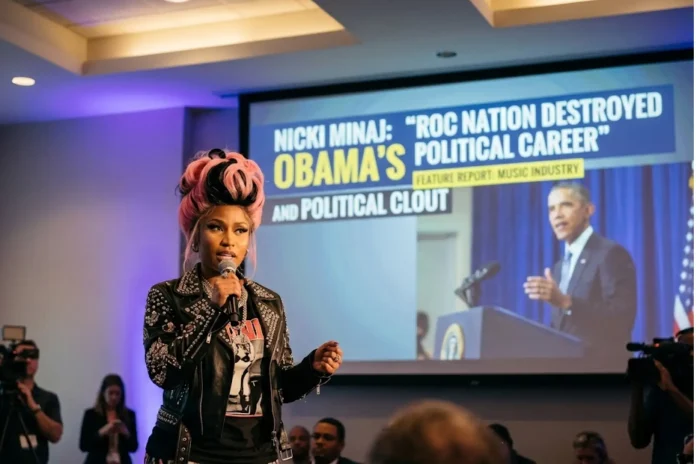
In a wide-ranging interview with TIME magazine at Mar-a-Lago in Florida, Nicki Minaj directly accused Jay-Z of damaging Barack Obama’s standing among rappers. She stated that Obama’s close friendship with Jay-Z “ended up costing Obama a lot, whether he knows it or not,” because “lots of rappers don’t like Jay-Z and were afraid to say it.” Minaj framed her long-standing accusations that Jay-Z used his Roc Nation company to sabotage her own career as part of a broader pattern of concentrated industry power that breeds resentment among other artists.
The Trinidadian-born rapper, whose full name is Onika Tanya Maraj-Petty, has nursed a public rivalry with Jay-Z for years. She alleges that Roc Nation has blocked her projects and opportunities while wielding outsized influence that silences critics. This isn’t the first time Minaj has gone public with accusations against Roc Nation. She previously claimed the company backed Kendrick Lamar over Lil Wayne in ways that rewrote industry hierarchies. In the TIME interview, Minaj framed her personal grievances as part of a larger disillusionment with Obama and the Democratic Party, expressing frustration over expectations that Black entertainers must automatically support Democrats. Roc Nation has not responded to requests for comment.
Obama secured decisive victories in 2008 and 2012 and maintained visible alliances with Jay-Z at high-profile events. Jay-Z built Roc Nation into a force in music, sports representation and business affairs. Minaj’s remarks come as she has increasingly aligned with Donald Trump. She was granted U.S. residency through Trump’s “gold card” initiative earlier this year. That move positioned her break from the industry-Democratic consensus as a conscious shift rather than a slip. The interview at Mar-a-Lago itself was a statement: the venue placed her squarely inside the political world she is now operating in.
On social media, many pushed back on her framing, noting Obama’s proven electoral success and enduring legacy with voters. Obama’s own curated playlists continue to dominate hip-hop charts, suggesting the genre’s relationship with him remains strong. Still, Minaj’s accusations tap into real debates about power concentration in hip-hop: who benefits, who gets frozen out, and whether celebrity relationships with politicians do lasting damage or simply reflect existing fault lines. Those questions do not have clean answers, which is partly why they keep surfacing.
Minaj’s latest move places her at the center of a rare collision: personal grievance, industry politics and electoral realignment, all under the lights of a presidential property. Whether it reshapes anything beyond her own brand depends on who, if anyone, in the industry decides to respond publicly.
For context on Roc Nation’s activities, see their official site. More on Barack Obama’s initiatives appears through the Obama Foundation.