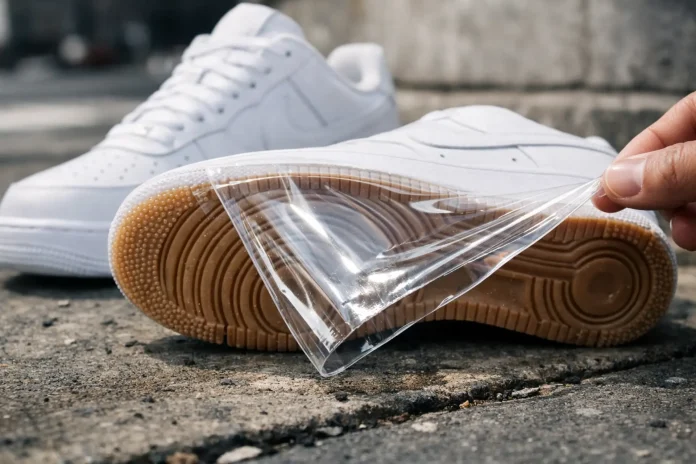
A quick scroll through X and you might stumble on a clip that’s got sneakerheads buzzing. Posted by @raphousetv2, this 8.5-second video shows someone slapping a clear, sticky plastic film onto the bottoms of crisp white Nike Air Force 1s. The caption? “People Invented A New Stick-On Plastic To Protect Shoes From Dirt! Would You Cop This??” It’s racked up over 82,500 views, 1,115 likes, 110 reposts, 77 replies, 178 bookmarks, and 23 quotes. Not bad for a bite-sized demo that promises dirt-proof kicks without the hassle.
A tweet from X.
Let’s break it down simple: This isn’t some sci-fi gadget. It’s a transparent, self-adhesive film think sole guards or outsole protectors that you cut to fit your shoe’s bottom, peel off the backing, and stick on. For the best hold, some folks hit it with a hairdryer to make it mold to the tread. The goal? Keep those white soles spotless from street grime, scuffs, and everyday scrapes while you’re out and about. As one product description puts it,
“It acts as a sacrificial layer that takes the dirt instead of your actual sole.”
Hold up before you hit “add to cart,” know this: The video’s real, showing a legit product. But calling it a “new invention”? That’s stretching it. These sole protectors have been around since at least the early 2010s, popping up in sneaker forums and tied to collector culture. They even echo older ideas from industrial shoe covers used in hospitals or job sites.
In the U.S., where sneakers are basically a national obsession, these films fit right in. The global sneaker market’s on track to hit $96 billion by 2026, per Statista. You can snag them on Amazon or sites like Sneakare and Reshoevn8r for $10 to $30 a pack. Brands like SneakerSoul Sole Protector or Reshoevn8r Sole Shields offer pre-cut options or big sheets for DIY. User reviews average around 4.2 out of 5 stars praise for keeping “DS” (deadstock) pairs fresh, but gripes about peeling after 1-2 months of heavy wear or reduced traction. One Amazon reviewer said,
“Lasts 20–60 wears before cracking,”
while another warned,
“Can reduce traction on some surfaces risk of slipping.”
Replies to the post are split down the middle. Fans rave about it for city streets:
“Great for urban environments,”
One user commented, loving how it keeps kicks pristine. But detractors aren’t holding back.
“One good slip and your body gon take a screenshot,”
quipped a critic on slippage risks. Others hit on eco worries:
“Yeah, create more single use plastic.. that’s exactly what we need,”
highlighting the waste from these disposable films amid growing U.S. sustainability pushes. It’s a classic divide in sneaker world preservation versus practicality.
This is a solid, niche accessory for collectors who treat their sneakers like investments. But it’s no revolution just clever marketing making old tech feel fresh. Before buying, dig into reviews on Amazonor Home Depot, test for slip on your floors, and think about that plastic footprint. In a resale scene where condition is king, it might save your soles but only if you’re cool with the trade-offs. As sneaker culture evolves, tools like this remind us: Hype sells, but real wear tells the story.