

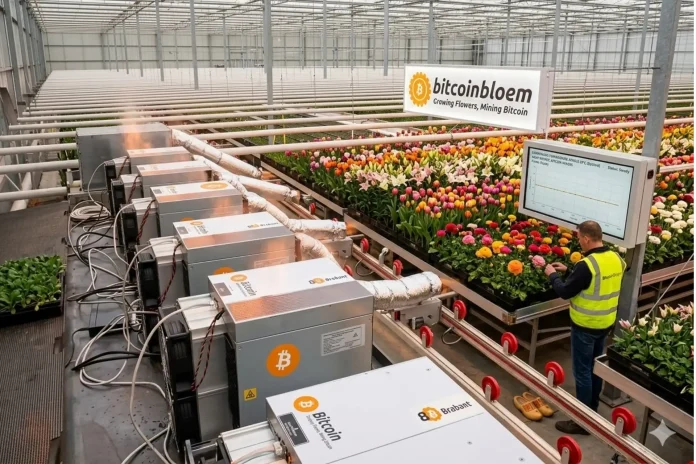
A Dutch tulip grower near Amsterdam has deployed six solar powered Bitcoin mining servers inside her greenhouse to generate the precise heat needed for stable flower production while dramatically cutting natural gas expenses. The system redirects the hot exhaust from the rigs directly to the tulip beds creating a reliable twenty degree temperature boost without any additional fossil fuels. Farmer Danielle Koning teamed with engineer Bert de Groot to launch this setup back in 2022 when skyrocketing energy prices threatened many agricultural operations with shutdowns or worse.
The mining units run nonstop on electricity supplied entirely by rooftop solar panels turning what would otherwise be wasted processor heat into a practical resource for crop cultivation. Each server carries an approximate market value of fifteen thousand euros with the total installation split evenly between the farmer and the mining company. Air flows into each server at cooler ambient levels and exits significantly warmer after the complex calculations that secure the Bitcoin network creating the twenty degree Celsius delta that ducts channel throughout the greenhouse ensuring even warmth reaches every row of blooms and supports both growth and bulb drying processes year round.
Koning owns three of the servers outright and keeps all the Bitcoin they produce while de Groot retains the other three and provides monthly maintenance visits to clear dust and insects from the fans. She first connected with him after viewing an online demonstration of similar heating applications and quickly arranged the custom installation. This practical demonstration continues to highlight how targeted technology partnerships can deliver financial relief and operational resilience for family run farms facing unpredictable market pressures.
Exact Bitcoin generation amounts remain undisclosed publicly due to network variables yet the dual revenue stream from cryptocurrency alongside gas savings provides clear economic upside. The approach stands out as carbon negative overall because renewable solar energy powers the entire mining activity and displaces natural gas consumption that would otherwise release more emissions. Full server valuation and ownership split details confirm the fifteen thousand euro per unit figure and balanced arrangement that benefits both parties directly.
Critics often focus on the high electricity demands of cryptocurrency networks yet examples like this one show how waste heat recovery can flip the narrative toward genuine environmental gains in agriculture. De Groot had expanded to seventeen clients including restaurants and warehouses by late 2022 demonstrating rapid adoption of the model. With ongoing global challenges around energy volatility and climate demands such cross sector innovations offer scalable models that let farmers thrive alongside digital advancements rather than compete against them.

