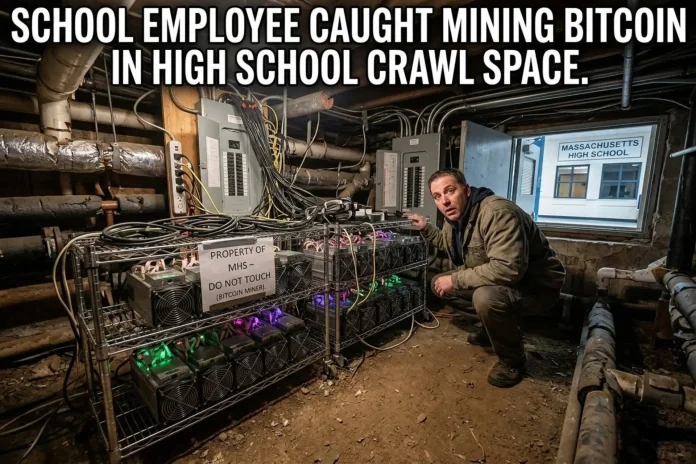
A former assistant facilities director in Cohasset secretly operated eleven high powered computers as a cryptocurrency mining rig inside a remote crawl space under the town’s middle and high school buildings. He drew power directly from the school’s electrical system for approximately eight months starting in late April 2021 and continuing until mid-December of that year. The unauthorized setup consumed four hundred fifty-five kilowatt hours of electricity each day and ultimately cost the town more than seventeen thousand dollars before it was discovered during a routine facilities inspection. Authorities later confirmed the operation after examining the equipment with federal assistance and tracing the installation to the employee who had unfettered access to the premises.
As a town employee the individual possessed the necessary access to cut a hole in an electrical panel and install conduit along with temporary ventilation ductwork to support the machines which ran continuously in the confined elevated space near the boiler room. The director of facilities noticed unusual wiring and materials during a standard walkthrough in December 2021. Police investigation details confirm how the equipment was removed and analyzed to identify the responsible party. This approach allowed the computers to function without interruption while avoiding the high costs that typically deter such activities in the area.
Nahas resigned from his position in early 2022 while the inquiry continued and he now stands charged with two misdemeanors including fraudulent use of electricity and vandalizing school property. Court documents on file in Quincy District Court outline the specifics of the installation. He initially failed to appear for an arraignment which resulted in a temporary arrest warrant but presented himself the next day in Quincy District Court to enter a plea of not guilty. Official court proceedings reflect the outcome of that appearance and the conditions imposed with release on personal recognizance and instructions to stay clear of all Cohasset public buildings. The case advanced to pretrial stages although no additional public details on any final resolution have surfaced in the years since.
Cryptocurrency mining demands enormous amounts of electricity to power the constant computations needed to validate blockchain transactions and generate new coins. In regions like New England where utility rates rank among the highest in the nation running such equipment at personal expense rarely yields net profit according to industry observers. Public records reviewed in the matter show the full extent of the power consumption involved. This approach effectively subsidized the operation through public funds.
This case serves as a stark reminder of the security gaps that can exist even in everyday public institutions where trusted insiders hold significant access. Taxpayers and families in the community expect school resources to support education rather than subsidize private enterprises no matter how innovative they may seem. As cryptocurrency adoption grows broader vigilance and updated protocols will prove essential to safeguard shared assets and maintain public trust in local government operations. The episode has also drawn renewed attention online in recent days through circulation of the original news footage highlighting how such stories continue to captivate public interest years later.