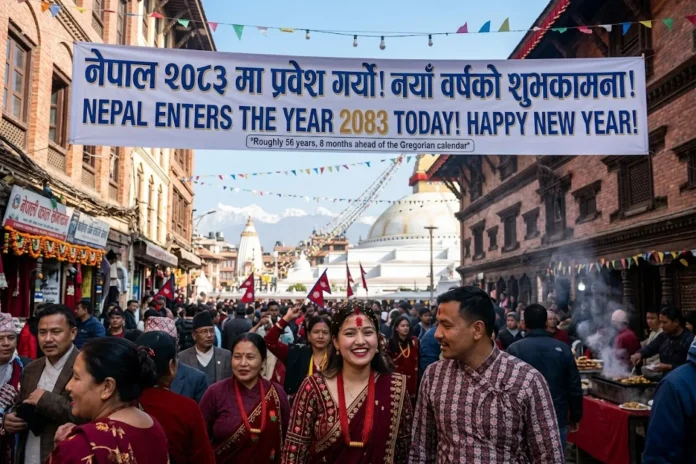
Nepal entered the year 2083 on Tuesday placing the country roughly 56 years and eight months ahead of the western calendar. This transition follows the official Bikram Sambat lunisolar system that Nepal has maintained as its sole national calendar for civil legal and cultural affairs. The shift takes place on the first day of Baisakh when the sun enters the constellation Aries in a moment known as Mesh Sankranti. Citizens across the nation marked the occasion with prayers processions and communal gatherings that honor centuries of shared tradition.
The Bikram Sambat calendar draws from ancient Hindu astronomical principles and remains the only such system still used officially by any country worldwide. It governs everything from school terms to public holidays and government records while families continue to consult it for auspicious dates in personal milestones. In practice Nepal also references the Gregorian calendar for international dealings, yet the domestic framework ensures cultural continuity in daily routines. Detailed listings of events for the new year appear on the official Nepali calendar which confirms Baisakh 1 aligns with April 14 and highlights key festivals.
Major celebrations unfolded most prominently in Bhaktapur where the Bisket Jatra festival features the dramatic raising of a towering wooden pole to symbolize victory over evil forces. Similar observances spread through Kathmandu Pokhara and rural villages with temple visits traditional music and shared feasts bringing communities together regardless of background. The Government of Nepal recognizes the day as a public holiday underscoring its importance to national identity. Full schedules of official observances for 2083 can be reviewed on the Ministry of Home Affairs public holidays page.
This distinct approach to timekeeping highlights how Nepal balances deep cultural roots with modern global engagement. The calendar difference often prompts international curiosity especially among visitors who discover they have effectively stepped forward in time upon arrival. Such traditions foster pride among Nepali people while inviting outsiders to appreciate alternative perspectives on progress and heritage. Insights into the deeper meaning and rituals appear in resources on Nepali New Year traditions and celebrations.
Ultimately the arrival of Bikram Sambat 2083 serves as a vivid illustration of cultural resilience in an interconnected world. While global headlines focus on unified calendars and synchronized events Nepal quietly demonstrates that preserving an independent timeline strengthens rather than isolates a society. The milestone reminds everyone that time itself can be measured in ways that honor history without rejecting the present and it encourages broader respect for the diverse frameworks that shape human experience across borders.