

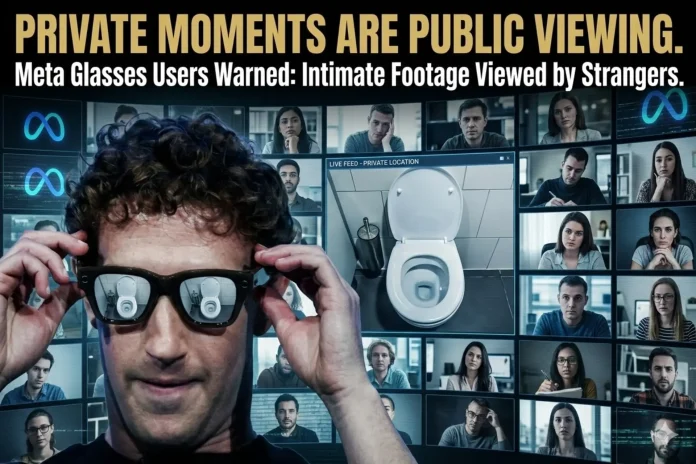
Meta’s Ray-Ban smart glasses promise effortless hands-free living, letting you snap memories, ask questions, and navigate the world with a simple “Hey Meta.” Yet behind that sleek convenience lies a quieter reality: every private moment captured by those built-in cameras can end up on the screens of human reviewers halfway around the world.
When users press record or speak to the assistant, footage streams straight to Meta’s cloud. There, algorithms slice out clips that need labeling so the AI can better understand objects, scenes, and context. Those clips travel to contractors at Sama in Nairobi, Kenya, where workers draw bounding boxes, transcribe dialogue, and rate content for quality. The company applies face blurring and claims it follows standard privacy protocols, but the system isn’t foolproof. Reviewers have described watching users undress, use the toilet, have sex, scroll through pornography, or flash bank cards, all without the subjects ever knowing their most unguarded seconds were being studied.
This isn’t a glitch in an otherwise clean machine; it’s the human backbone of modern AI training. Meta’s own Responsible AI guidelines talk about fairness, safety, and privacy, yet they rely on outsourced labor to refine models that power everything from Llama chatbots to wearable assistants. Sama has handled similar annotation work for Facebook and Instagram for years, often under grueling conditions that sparked lawsuits over low wages, mental-health strain, and restricted speech. The same firm now helps train the glasses’ multimodal brain, turning everyday life into training data at scale.
Meta’s terms of service do mention that “in some cases” human reviewers may examine interactions with its AIs, but the disclosure sits buried in legal fine print most buyers never read. There is no clear, one-tap opt-out for feeding footage into AI improvement. European watchdogs have taken notice: the UK’s Information Commissioner’s Office is formally questioning Meta about the practice, while Sweden’s privacy authority and digital-rights groups like NOYB press for stronger consent rules. A fresh California class-action lawsuit accuses the company of false advertising, arguing that privacy-focused marketing hid the reality of a global surveillance pipeline.
The ethical tension runs deeper than any single gadget. AI companies everywhere still need humans to teach machines nuance that code alone can’t grasp. Yet the current model funnels the emotional cost onto lower-wage annotators in the Global South while Western users enjoy seamless features. Meta insists its filtering and oversight meet industry standards, but the Swedish investigation that surfaced these stories shows how easily intimate life slips through the cracks.
For anyone who owns a pair of Ray-Ban Meta glasses, the message is straightforward: convenience now carries a hidden audience. The same device that feels like freedom can quietly broadcast your private world to strangers paid to watch. Until Meta builds true opt-outs, ironclad blurring, and transparent data flows, the glasses remain a vivid reminder that the future of AI is still being shaped by people, not just processors, and those people see far more than we ever intended.

