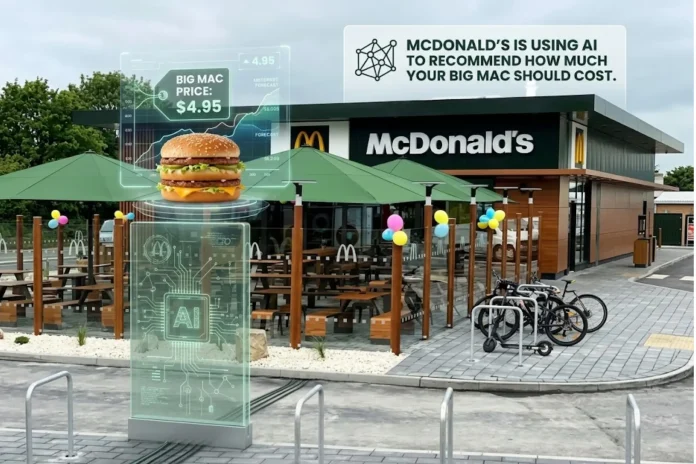
McDonald’s is using an artificial intelligence system to recommend prices for menu items at individual restaurants, including the Big Mac, based on estimates of what local customers are willing to pay and data from nearby competitors.
The pricing engine relies on machine-learning algorithms that continuously analyze millions of daily transactions across the company’s nearly 14,000 U.S. restaurants. It generates what McDonald’s calls the “optimal price” for each item at each location, according to a Reuters investigation published Sept. 29, 2026.
Screenshots of the franchisee interface reviewed by Reuters include messages such as “Your restaurant is showing MEDIUM SENSITIVITY to Price,” drawn in part from assessments of customer willingness to pay in the area. The system also pulls public menu prices from nearby Wendy’s and Burger King locations. Those chains told Reuters they do not use AI for pricing decisions.
A Reuters check of the McDonald’s app in September found a company-operated store in Fresno, California, listing a Big Mac at $5.69 while another company-run restaurant two miles away charged $6.89, a 21 percent difference. Reuters could not confirm whether the AI recommendations caused the gap.
McDonald’s said in a statement that its pricing portal is “a tool, not a mandate, designed to provide restaurant-specific recommendations to help franchisees deliver value for customers and make informed business decisions.” The company added that costs and market conditions vary even a few miles apart and described the Reuters reporting as speculative.
Five store owners told Reuters the company has pressured them to follow the AI suggestions. A June franchisee document reviewed by the news agency shows McDonald’s tracks deviations from the recommendations in detail. In January the company began requiring franchisees to be “constructively engaging with McDonald’s approved Pricing Consultant and Tools” as part of updated business standards.
Karen King, a former McDonald’s franchisee who retired from the system last summer after decades as an operator in Florida, said phone calls from corporate officers followed when prices strayed from the guidance. “You don’t really have much of a choice anymore” about pricing, King told Reuters. McDonald’s did not address her specific comments.
Chief Executive Chris Kempczinski told investors in August that pricing non-compliance in certain cases forms part of franchisee business reviews that affect growth opportunities and eligibility. McDonald’s earns most of its profit from royalties on franchisees’ total sales, creating an incentive to favor volume over individual store margins. Franchisees face rising labor, rent and food costs that have climbed an estimated 36 percent since 2019, according to the National Restaurant Association.
The company has used some form of AI pricing tools since at least 2019. In 2023 Kempczinski told investors McDonald’s had developed proprietary tools to evaluate pricing at individual restaurants. That same year, according to a lawsuit filed by Connecticut franchisee George Michell, the tools suggested charging about $18 for a Big Mac meal at a restaurant along a state turnpike. Michell, who operates dozens of McDonald’s restaurants across several Northeastern states, alleges in the ongoing case that the brand sought to push him out of the system. McDonald’s has disputed the claims and said Michell repeatedly breached franchise agreements. Courts have dismissed some of the breach-of-contract allegations.
Two former employees of Tiger Analytics, which runs the AI platform, said McDonald’s regularly supplies rules and corporate targets that shape the recommendations. Those parameters have included focusing increases on items that have not risen in price for at least two years and excluding ice cream and soft drinks from summer hikes. Tiger Analytics declined to comment.
McDonald’s terms of service for the pricing portal caution that franchisees “may be competitors of each other” and urge users to comply with antitrust laws, advising them to consult their own attorneys. The company said it takes antitrust compliance seriously. The Federal Trade Commission and Justice Department did not respond to requests for comment on the system.
In recent months the engine has recommended more conservative pricing, including some decreases, after earlier suggestions of larger increases during the pandemic and high inflation. U.S. foot traffic at McDonald’s has declined year-over-year for every complete month since March, according to data firm Placer.ai estimates.
Other restaurant companies are exploring similar technology. Yum Brands, owner of KFC and Taco Bell, is among those turning to AI for pricing and operations. Yum did not immediately respond to a request for comment.