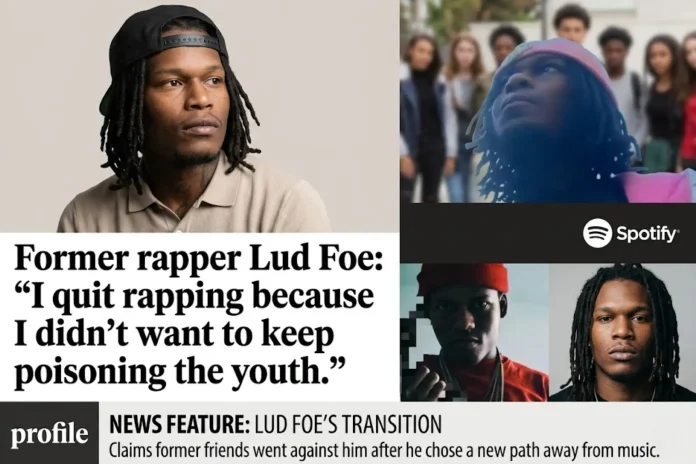
Chicago drill artist Lud Foe has permanently stepped away from rapping, citing deep personal healing and a refusal to continue producing content he now sees as harmful to younger generations. In a raw, selfie-style video shared widely on May 21, 2026, the 29-year-old West Side native explained that growth and mental healing shifted his mindset so profoundly that he could no longer create the violent, street-oriented music that built his career.
Lud Foe, born William Akins on July 15, 1996, described how his evolving perspective made it impossible to rap about his past lifestyle. He expressed a clear desire to stop feeding “bullshit” to the youth in his community and generation. This decision reflects not just artistic burnout but a deeper commitment to personal accountability and fatherhood. He wants to raise his son in a more positive environment, free from the cycles he once documented.
The artist also revealed significant resistance from his former circle. Old friends reportedly opposed his healing process and tried to pull him back by reminding him of his previous self and leaking unreleased tracks. Lud Foe stated he has cut ties with those still engaged in negativity, prioritizing his own transformation over past associations.
These revelations come at a time when the Chicago drill scene continues to face intense scrutiny amid ongoing gun violence. The genre, born on the city’s South and West Sides in the early 2010s, remains marked by its raw depictions of gang life, gun violence, and street rivalries. While drill has achieved global influence, Chicago has seen persistent gun violence, with an uptick in shootings and homicides reported in early 2026. Multiple young drill-associated artists have lost their lives in recent years amid ongoing feuds, raising difficult questions about the relationship between the music, social media clout, and real-world trauma in underserved neighborhoods.
Lud Foe rose in the mid-2010s with aggressive tracks such as “Cuttin Up” (remixed by Lil Durk) and projects like the No Hooks series and 2020’s Guns Up Funds Up. His sound captured the gritty realities of Chicago’s West Side. A near-fatal 2017 car accident, involving a collision with a semi-truck that left him with serious injuries including a broken jaw, marked an early turning point. Though he released music afterward, his activity has been limited in recent years as he focused on internal work.
His departure highlights broader tensions within drill culture. Many artists have used the genre to process trauma and limited opportunities in disinvested communities, yet critics argue that the confrontational style and online rivalries can fuel cycles of violence. The human cost of drill feuds has left lasting impacts on families across Chicago. Lud Foe’s stance represents a growing awareness among some creators about their cultural impact and the need for healing beyond the streets and industry pressures.
Fan reactions have been largely supportive, with many praising his maturity while others express nostalgia for his intense catalog. The video has spread rapidly across X and Instagram, sparking discussions about artist evolution in a genre often tied to authenticity through lived experience.
Lud Foe built his career independently via YSN Records and the Boochie Gang collective. His journey mirrors the challenges many drill figures face when confronting the human cost of the narratives they once championed. By choosing fatherhood and personal growth over continued output, he adds his voice to a necessary conversation about accountability in Chicago drill and its influence on the next generation.
For more on Lud Foe’s discography, visit his AllMusic artist page. Public court records on past incidents are accessible through Illinois repositories. Ongoing Chicago violence trends can be tracked via local data sources such as the Chicago Sun-Times violence tracker.