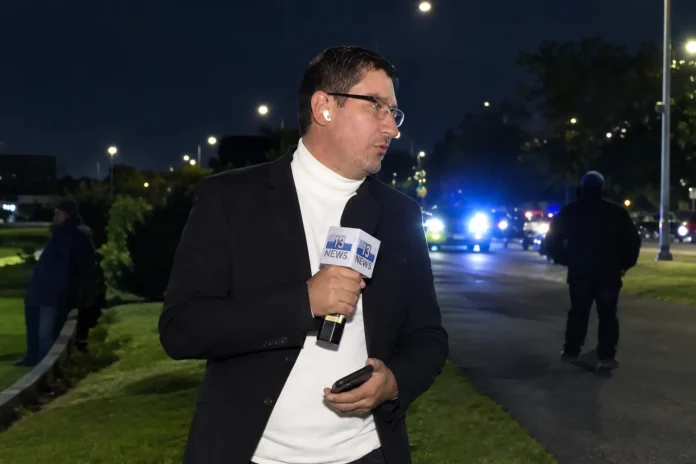
A routine outdoor live shot in Bogotá turned tense in seconds. On the night of Wednesday, October 21, 2026, around 10:19 p.m. local time, Noticias Uno reporter Miguel Ángel Peñaranda was on air for El Reporte Coronell when two men on bicycles allegedly tried to snatch the phone he was holding for the broadcast. He dodged both attempts within moments of each other, stayed composed, and kept talking.
Peñaranda, glasses on, white turtleneck, dark jacket, backpack and earbuds, stood on a public sidewalk-area path near traffic and streetlights while contributing to a political discussion segment. A first cyclist rode close and reached toward the phone. Peñaranda reacted fast, pulled away, and told his colleagues on air:
“Uy, pasó un señor y casi me deja sin celular…”
roughly,
“Whoa, a guy passed and almost left me without a phone…”
Seconds later a second cyclist came closer and tried again. He dodged once more and added, “Vea, dos” “See, two.”
Producer and on-air colleague Jhonathan Taborda Carmona immediately confirmed what viewers could see:
“Lo están intentando robar en varias veces. Dos veces le intentaron rapar el celular”(“They’re trying to rob him several times. Twice they tried to snatch the cell phone”).
Others on the show, including Yezid Daniel Baquero, urged him to move toward a nearby gate or safer spot. Peñaranda held onto the device, noted the insecurity at that hour, and continued the segment briefly. No injuries were reported and nothing was taken. Noticias Uno posted the clip the next day; it spread widely, including through international accounts such as NEXTA.
What remains unestablished through the latest available coverage (October 24, 2026): the identities of the two men, any arrests, a formal police complaint from Peñaranda, or confirmation of an active investigation. One outlet referred to motorcycles rather than bicycles; the original broadcaster and most direct accounts that reviewed the footage describe bicycles.
Colombians call this kind of quick snatch-and-grab a “raponazo” a sudden grab of a phone or valuables, often by people on bikes or motorcycles. It is a familiar street-crime risk in Bogotá’s public spaces, especially for anyone standing still and holding a device at night. City council data cited from the Security Secretariat showed 14,274 mobile phones reported stolen in Bogotá between January and May 2026, with 1,649 recovered (about 11.6 percent). Those numbers explain why the live clip resonated; they do not by themselves prove a citywide surge.
Journalists working outdoors after dark face the same vulnerability as any other stationary person with a visible phone. Peñaranda’s quick reflexes kept the broadcast going and the phone in his hand. The video simply put a familiar urban hazard on live television for a few unforgettable seconds.