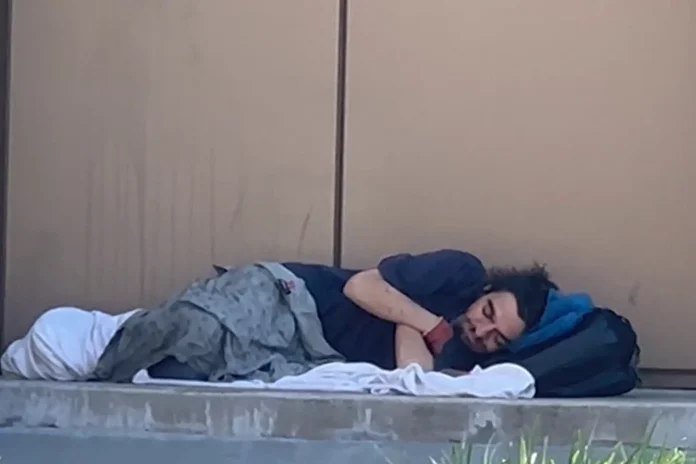
A stark photograph captures former Nickelodeon actor Tylor Chase curled up asleep on a bare concrete stoop in Riverside, California, highlighting why authorities remain unable to compel him into sustained treatment despite his visible struggles with addiction and mental health.
The image, taken days ago, shows the 36-year-old former child star lying on his side directly on the hard ground outside a plain building entrance, with only a thin piece of fabric for padding. Disheveled dark hair peeks from under a pulled-up hoodie; his beard is unkempt, and his layered but worn clothing is rumpled against the chill. A few scattered belongings, perhaps a backpack, lie nearby, underscoring his transient life in an exposed urban spot with no overhead shelter. Chase appears deeply exhausted in the daylight nap, his posture a tight curl as if conserving warmth or shielding himself. Yet, it conveys profound vulnerability on an unforgiving surface open to elements, passersby, and street dangers.
This latest sighting follows a brief Christmas Day intervention where advocates secured a 72-hour involuntary psychiatric hold after finding him in distressing conditions. He received medical care and was lined up for rehab, but evaluators released him after roughly 36 hours upon determining he no longer met the criteria. Shortly after, a second crisis team encountered him allegedly smoking methamphetamine in freezing weather without proper shoes or a jacket, yet deemed him not to qualify for further hold and left him on the streets.
California’s Lanterman-Petris-Short (LPS) Act forms the primary legal barrier, requiring clear evidence that mental disorder renders someone a danger to self or others, or gravely disabled—unable to meet basic needs for food, clothing, or shelter. Riverside police confirm weekly contacts with Chase, offering resources he politely declines, but note he accesses some family or stranger support, preventing him from crossing that grave disability threshold. Even minor drug-related issues lead to quick releases, and longer conservatorship demands court processes not yet pursued here.
Recent expansions via Senate Bill 43 allow broader interpretation of grave disability to include severe substance disorders affecting safety or care, but county implementation lags, and Chase’s case repeatedly falls short. His family, including a mother in Riverside providing essentials and a father in Georgia involved in past efforts, emphasizes his refusal of ongoing medication for diagnosed schizophrenia and bipolar disorder alongside methamphetamine use.
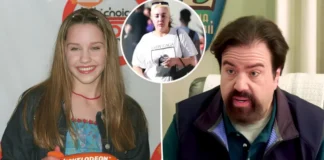
Chase’s journey from playing quirky Martin Qwerly on Ned’s Declassified School Survival Guide to this point spans over a decade of relapses despite rehab attempts. The stoop photo serves as a poignant reminder of how protective laws, meant to prevent historical abuses, can tie hands when illness fuels treatment refusal.
This deadlock exposes California’s ongoing challenge: upholding civil rights while addressing intertwined mental health and addiction crises amid homelessness. Advocates, such as former co-stars and recovered actors, push for help; yet, without Chase’s sustained willingness or stricter legal findings, options remain limited to voluntary paths that he often rejects. Reform debates intensify, but for now, individuals like him navigate a system prioritizing autonomy even as vulnerability mounts.
For details on the LPS Act, review the California Welfare and Institutions Code on community treatment. Specific 5150 hold provisions are outlined in Section 5150. Senate Bill 43 expansions appear in the Governor’s 2023 signing statement. Riverside behavioral health resources are available through county services.