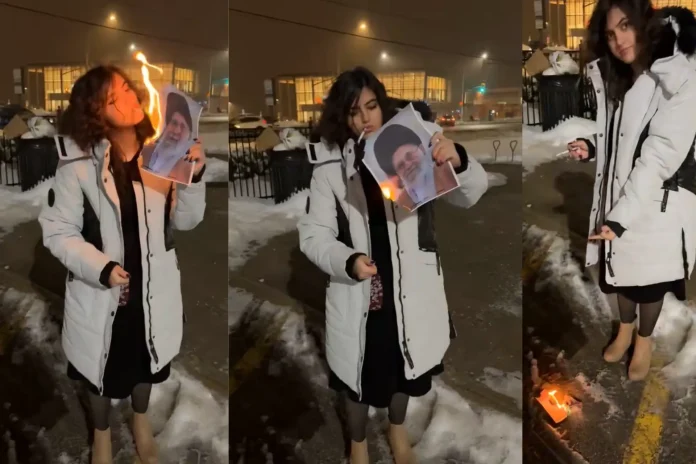
An Iranian woman in Toronto boldly ignited a portrait of Supreme Leader Ayatollah Ali Khamenei and used the flames to light her cigarette, embodying raw defiance that has ignited viral discussions worldwide amid Iran’s deepening unrest. This 34-second silent clip, showing her unveiled and composed as she exhales smoke into the camera against a snowy urban backdrop, surfaced on social media platforms like X and Instagram, amassing millions of views and reposts since late December 2025. The act merges two potent taboos under Iran’s strict Islamic laws: desecrating the leader’s image, which can lead to imprisonment or execution, and women smoking publicly, long viewed as improper and restricted by societal norms.
While the woman’s protest symbolizes life-risking resistance amid Iran’s escalating crises, including an 84 percent currency collapse and 72 percent food inflation that have sparked nationwide unrest since December 2022, it prompts comparisons to feminist actions in freer societies, such as the United States. Commentators, including sports analyst Clay Travis, have hailed it as surpassing 21st-century American feminist feats; yet, this view overlooks bold U.S. efforts, such as Tarana Burke’s 2006 launch of #MeToo, which empowered survivors to confront powerful abusers despite facing lawsuits, threats, and public vilification. Similarly, Jane Fonda’s repeated arrests in 2019 for climate and social justice protests, or Megan Rapinoe’s 2019 push for equal pay in soccer amid national backlash, demonstrate American women enduring personal and professional perils to advance equality, though in a context without state-sanctioned executions. Bravery, then, varies by environment: the Iranian act thrives on raw peril, while American ones build on sustained advocacy against systemic barriers.
At its core, this viral defiance roots in Iran’s long-simmering gender battles, intensified by the 2022 Mahsa Amini protests that killed over 550 and exposed mandatory hijab laws carrying fines up to £12,500 or 15-year sentences. Women there rage against curtailed rights in divorce, inheritance, and public life, compounded by economic despair from sanctions and regime priorities like funding foreign militias over domestic aid. As protests swell across 17 to 31 provinces with chants rejecting Gaza or Lebanon entanglements, defections among police—who now burn Khamenei’s images themselves—signal a regime teetering on legitimacy, especially among a youth-heavy population demanding freedom. By January 2026, with 20 to 45 fatalities from security crackdowns and internet blackouts hiding atrocities, these women’s tactics evolve to include public nudity or cleric confrontations, pushing boundaries in ways that redefine resistance.
In creative retelling, picture this act not just as flame meeting paper, but as a spark leaping continents, igniting solidarity in Toronto’s clashes between anti-regime crowds and IRGC-linked supporters, where threats and arrests mirror homeland dangers. It contrasts with American feminism’s strategic marches and media campaigns, such as Emma Watson’s 2014 UN HeForShe speech, which dismantled man-hating myths amid global scrutiny, or Kamala Harris’s trailblazing vice presidency, facing sexist attacks yet inspiring barrier-breaking progress. Such parallels reveal universal threads of empowerment, where one woman’s cigarette puff in exile amplifies calls for regime change, blending personal audacity with collective momentum against oppression.
For deeper insights, explore reports from Amnesty International on Iran’s crackdowns, Human Rights Watch analyses, and the United Nations fact-finding mission on abuses.
This moment underscores how individual gestures can expose regime vulnerabilities, potentially accelerating shifts if international outcry intensifies. While American feminists forge progress through institutional channels, often at the cost of their careers, the Iranian example highlights existential stakes, suggesting that true badassery emerges from context-specific risks. In weaving these narratives, the story evolves from isolated rebellion to a global tapestry of resilience, where flames of protest refuse to dim.