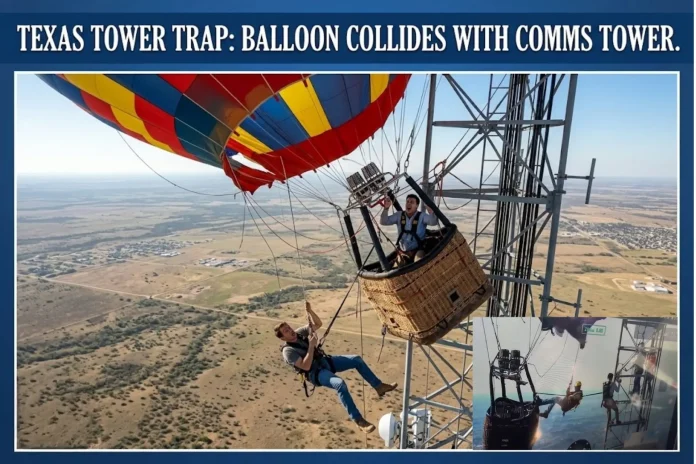
Two passengers found themselves dangling precariously 920 feet above ground when their hot air balloon collided with a communications tower in East Texas, prompting a daring high-angle rescue that unfolded over several tense hours. The incident occurred early Saturday morning on February 28, 2026, near the intersection of State Highway 300 and Farm-to-Market Road 1844 in north Gregg County, just outside Longview. Emergency responders from the Longview Fire Department, along with assisting agencies, arrived around 8:15 a.m. Central Standard Time after reports of the crash, where the balloon’s envelope shredded upon impact, leaving the wicker gondola snagged on the tower’s lattice structure. Both individuals remained conscious and cooperative throughout the ordeal, with no injuries reported, though they were transported to a local hospital for precautionary evaluations.
Rescue operations began swiftly, with climbing efforts starting at approximately 8:50 a.m. using multiple rope systems to navigate the tower’s extreme height, estimated at over 1,100 feet total. Firefighters reached the stranded pair around 10 a.m., carefully lowering them one by one to safety by about 10:58 a.m., a process complicated by strong winds at that elevation. The tower, which supports KYKX 105.7 FM radio broadcasts, remained structurally sound, but the deflated balloon envelope and gondola stayed entangled, requiring specialized crews to plan its removal amid ongoing weather challenges. As of March 1, preparations for extraction were underway, with teams developing strategies to disentangle the wreckage without further risk.
For more on the tower’s specifications, consult the FCC Antenna Structure Registration database. Strong winds likely played a role in the collision, though an official investigation by aviation authorities is pending to determine if factors like pilot navigation or mechanical issues contributed. Hot air balloon flights, while popular for recreation in Texas, demand precise awareness of obstacles such as communications towers, which are marked but can pose hazards in variable conditions. This event highlights the vulnerabilities in low-altitude aerial activities, especially in areas dotted with infrastructure, and underscores the need for enhanced pre-flight checks or regulatory updates to prevent similar close calls. Experts in aviation safety might point to this as a reminder for operators to integrate real-time weather data more rigorously into their planning.
The successful outcome owes much to the expertise of local first responders, whose training in technical rescues turned a potential tragedy into a story of resilience and coordination. Both passengers emerged unscathed, a testament to the quick response and the individuals’ composure under duress. Incidents like this, though rare, prompt broader discussions on balancing adventure tourism with public safety, potentially influencing future guidelines from bodies like the Federal Aviation Administration. In East Texas, where outdoor pursuits thrive, this rescue serves as a valuable case study for emergency preparedness, ensuring communities remain equipped for the unexpected.