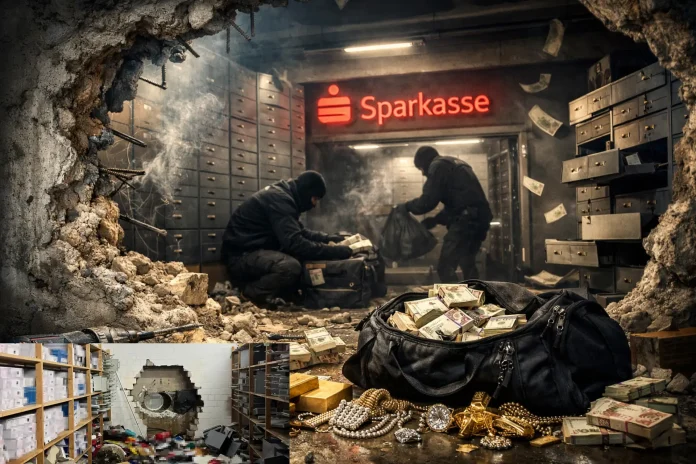
Thieves pulled off a brazen heist at a Sparkasse bank branch in Gelsenkirchen, Germany, drilling through a concrete wall from an adjacent parking garage to access the underground vault and loot contents worth an estimated €30 million from thousands of safe deposit boxes. The sophisticated break-in happened over the extended Christmas holiday weekend, when the bank was closed, and activity was minimal, allowing the perpetrators hours or possibly days to work undetected. Police discovered the crime early on December 29 after a fire alarm triggered a response from emergency services, revealing a large hole in the vault wall and over 3,000 boxes ransacked.
The image illustrates the precision of the drilled entry hole into the vault, as released by authorities.
The gang targeted only customer safe deposit boxes, stealing cash, gold bars, jewelry, and other valuables while leaving the bank’s own reserves untouched. Investigators believe several men were involved, based on witness accounts of multiple figures carrying heavy bags in the garage stairwell and CCTV footage showing masked individuals fleeing in a black Audi RS6 with stolen plates. This vehicle remains a key lead in the ongoing probe, but no arrests have been made as of December 31, and the thieves are still at large.
Affected customers, numbering around 2,700, faced immediate frustration as the branch stayed closed amid forensic work, with crowds gathering outside demanding access and answers. Many victims, including those from communities that traditionally store gold jewelry in such boxes, reported losses far exceeding the standard insurance cap of about €10,300 per box provided by the bank. Sparkasse has urged clients to submit damage reports through a dedicated hotline rather than individual police complaints, promising to coordinate with insurers for payouts while advising people to check personal household policies for additional coverage.
The operation’s professionalism, marked by the absence of triggered vibration alarms during prolonged drilling, raises serious questions about vulnerabilities in traditional bank vault security systems across Germany. While Sparkasse branches are commonplace and trusted for safe deposits, this incident highlights how holiday quiet periods and adjacent public access points, such as parking garages, can be exploited by organized crews. Recovery of melted gold or fenced jewelry seems unlikely, leaving many families to rely on limited insurance for irreplaceable losses and prompting broader discussions on whether banks need seismic sensors or enhanced monitoring to prevent future Hollywood-style raids.
For those impacted, the path forward involves filing documented claims and potentially receiving supplemental payouts; however, the emotional toll on customers who viewed these boxes as secure retirement safeguards cannot be overstated. This heist not only ranks among Germany’s largest but serves as a wake-up call for the banking sector to bolster physical defenses in an era where digital threats often dominate headlines. Authorities continue to review surveillance footage and witness tips, although the thieves’ clean escape suggests a well-planned job that may prove challenging to crack.
More details on the police investigation can be found in the official Gelsenkirchen police press release, while comprehensive coverage is available from the BBC report on the heist. For additional context and images, see the DW article estimating the €30 million loss and AP News photos of the crime scene.